What To Do In Oxford On A Budget? Free Options First
A budget-first plan for Oxford: what genuinely costs nothing, where the money goes, and which free GuruWalk walking tours anchor the day.
In Short
Oxford can be done almost entirely for free. Five museums, including the Ashmolean and the Pitt Rivers, cost nothing to enter. Several college quadrangles admit walk-in visitors at no charge. Christ Church Meadow, Port Meadow and Radcliffe Square are open public ground. Four free walking tours run on GuruWalk, all in English, one also in Italian. The main costs are a handful of charging colleges, one tower at GBP 7 and the ticketed sights.
This question sits inside the budget guide to free Oxford museums collection at Free Things To Do In Oxford, alongside pieces on colleges, meadows and evening services.
What Is The Short Answer?
The short answer is that most of Oxford's best sights cost nothing, and the few that charge are easy to route around. Five museums, from the Ashmolean to the Museum of the History of Science, are free to enter. Eight colleges let walk-in visitors through at no charge, though hours vary. The meadows, the river paths and Radcliffe Square are public. Four free walking tours on GuruWalk, all running in English, hold the day together without a fixed fee.
That ratio is unusual for a city with Oxford's visitor numbers. In most English destinations the museum cluster alone would absorb a serious slice of a day's spending. Here the cluster is the cheap part, and the spending traps are concentrated in a short list: the charging colleges, the tower climbs, the Radcliffe Camera interior, and Christ Church college and cathedral with its paid timed ticket.
A workable budget plan therefore inverts the usual order. Start with the free layer and treat anything paid as a deliberate single purchase rather than a default. A day built this way can include a museum morning, a free college quadrangle after lunch, a river or meadow walk in the afternoon, and a free guided walk to stitch the geography together, and the only money that moves is the money you choose to hand a guide.
The rest of this article works through that plan layer by layer: what genuinely costs nothing, where the money goes when it does go, and how the free walking tours fit into the middle of the day. Every figure below comes from the same verified set of attraction records and walk pages, so the split between free and paid is not guesswork.
It also matters what kind of trip you are building. A day visitor with one afternoon will spend it almost entirely in the free layer, because the free layer is the densest and sits closest together in the centre. A visitor with two or three days can afford to add one paid item per day, a charging college, a tower, a garden, and still come out spending less than a single ticket at a major attraction in London would cost. Either way the sequence is the same: free first, paid as a choice.
What Costs Nothing At All?
The fully free layer is bigger than most visitors expect. The Ashmolean, the Pitt Rivers, the Natural History Museum, the History of Science Museum and Modern Art Oxford all cost nothing to enter. The Museum of Oxford is normally ticketed (adults GBP 4) and free on set free entry days. Christ Church Meadow, Port Meadow and the river paths along the Thames and the Cherwell are open ground.
Start with the museums, because they are the least conditional free things in the city. The Ashmolean's own page states free admission to the permanent collection; its major special exhibition is ticketed, so treat that as a separate decision rather than part of the free entry. The same museum-with-paid-exhibition pattern is worth checking before any visit, but the other four museums listed here are free to enter outright. The small museums pair, the Museum of Oxford and the History of Science Museum, pairs a free museum (History of Science) with a low-cost one (Museum of Oxford, adults GBP 4, free on set days).
| Free sight | What it is | Condition |
|---|---|---|
| Ashmolean | Art and archaeology museum | Free entry, major special exhibition ticketed |
| Pitt Rivers | Anthropology and world collections | Free entry |
| Natural History Museum | Natural science displays | Free entry |
| History of Science Museum | Scientific instruments | Free entry |
| Modern Art Oxford | Contemporary art gallery | Free entry |
| Christ Church Meadow | Riverside walking meadow | Open public ground |
| Port Meadow | Common land with river frontage | Open public ground |
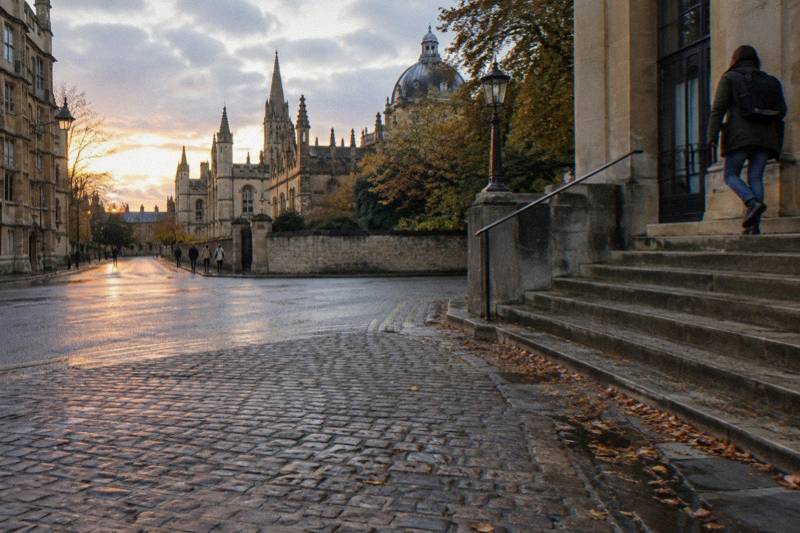
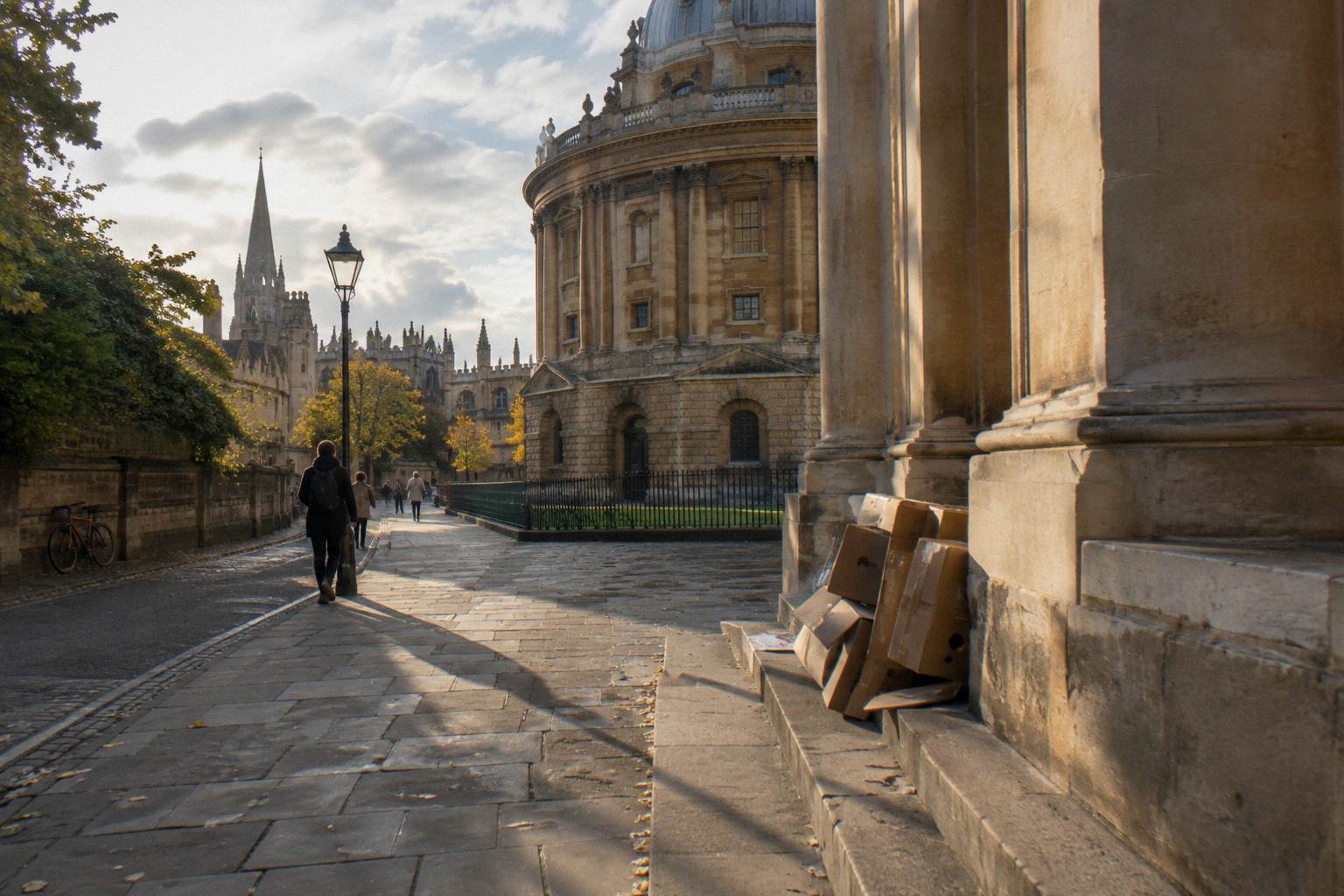
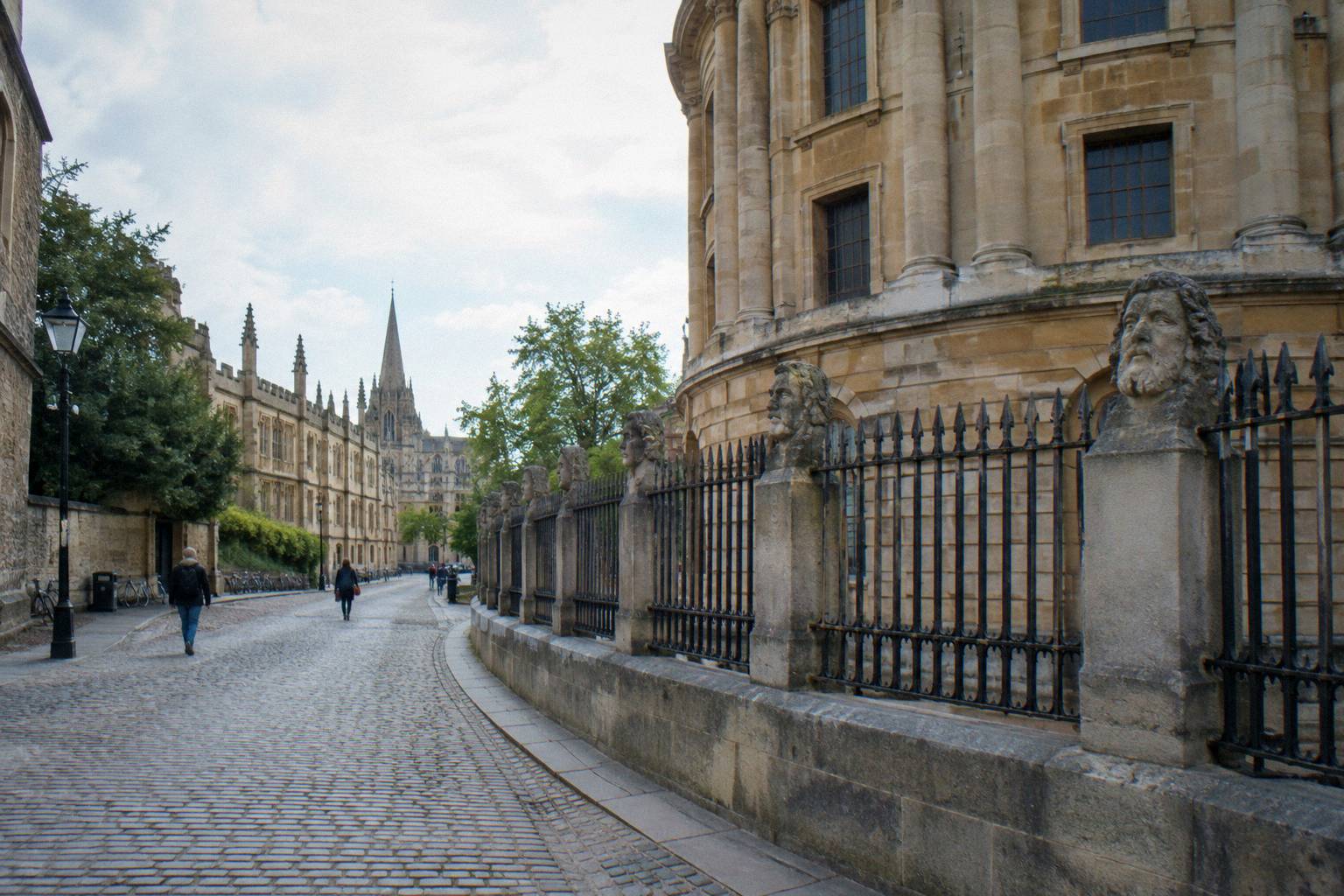
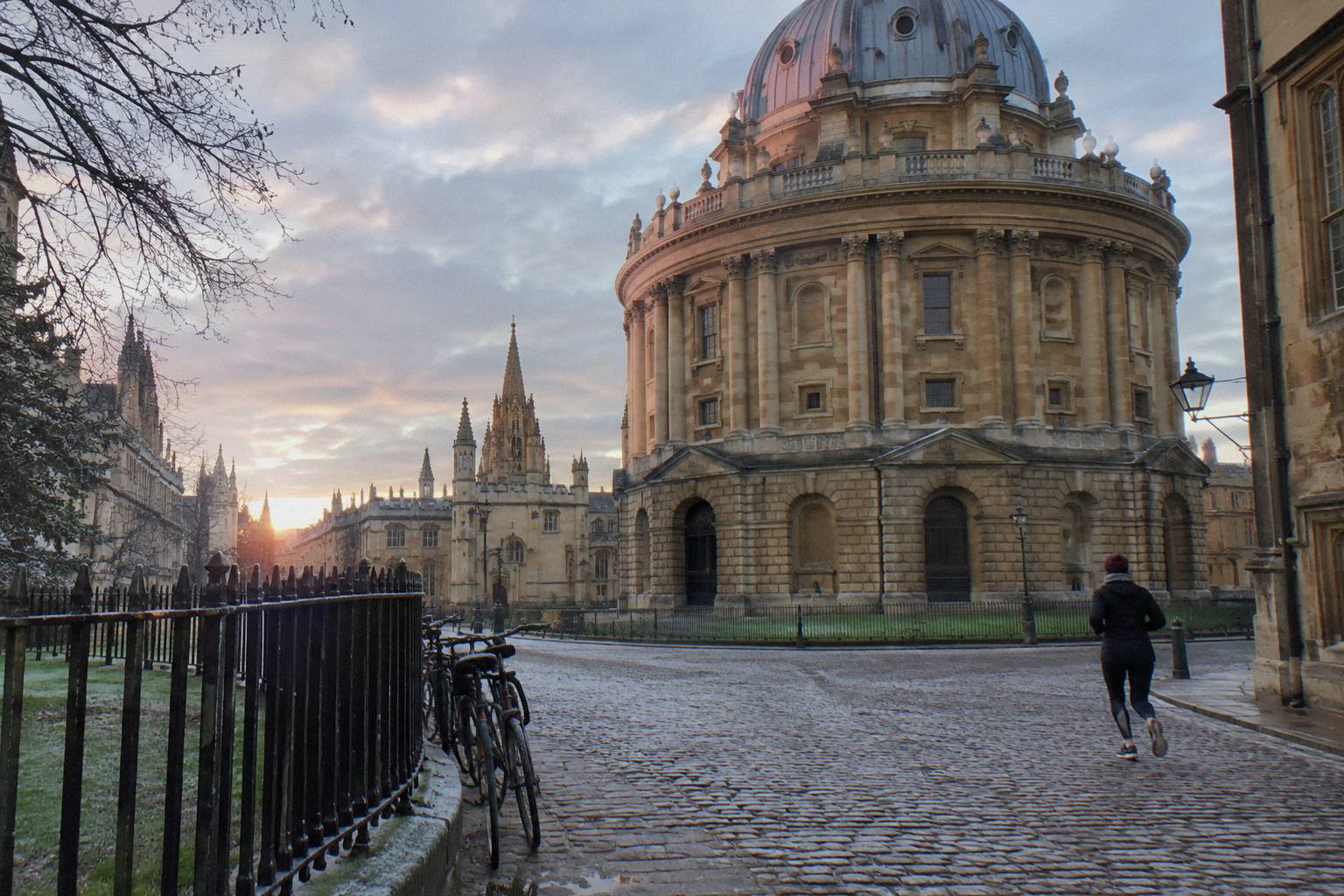
| Radcliffe Square | Architectural square | Free to look at, interior tour-only |
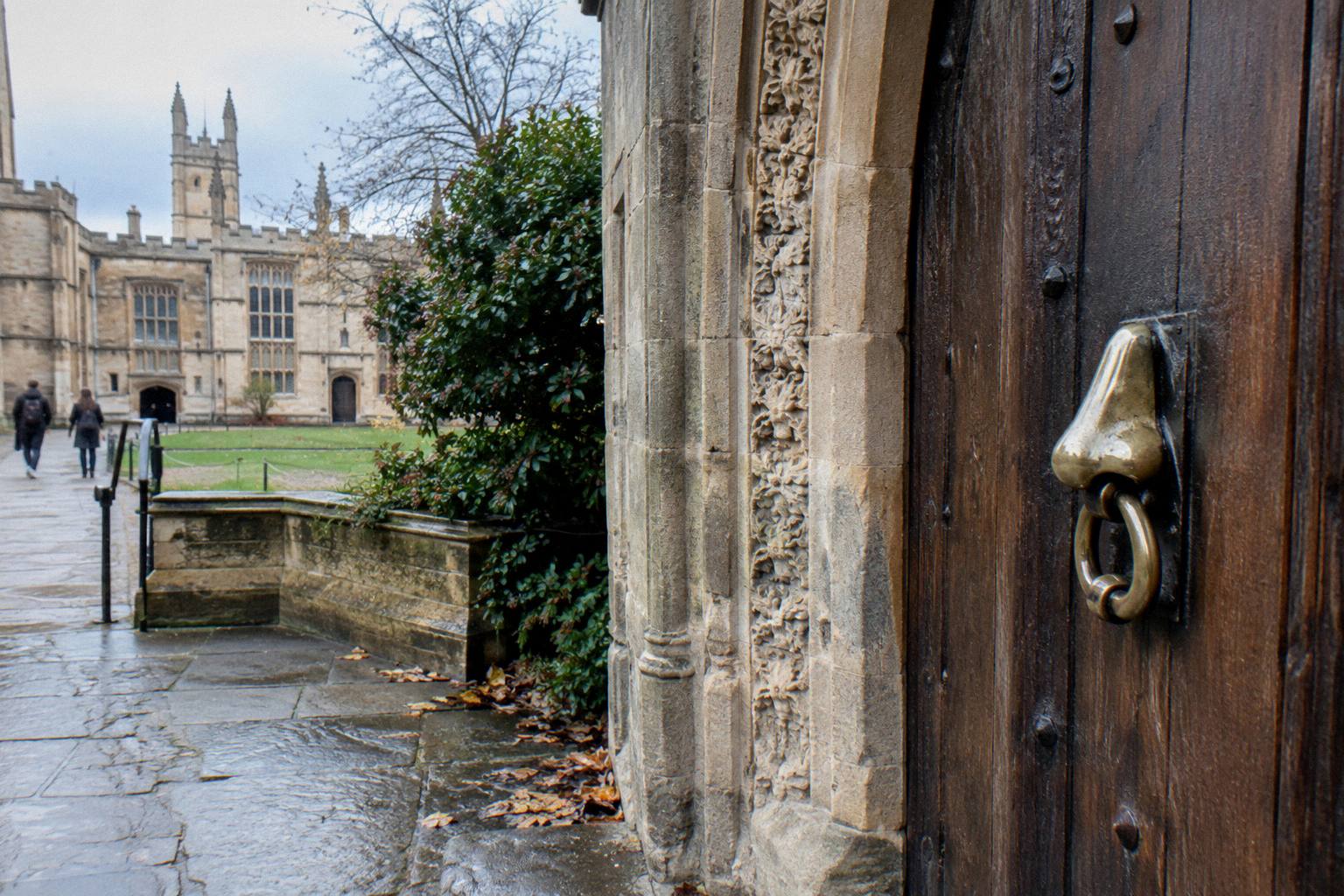
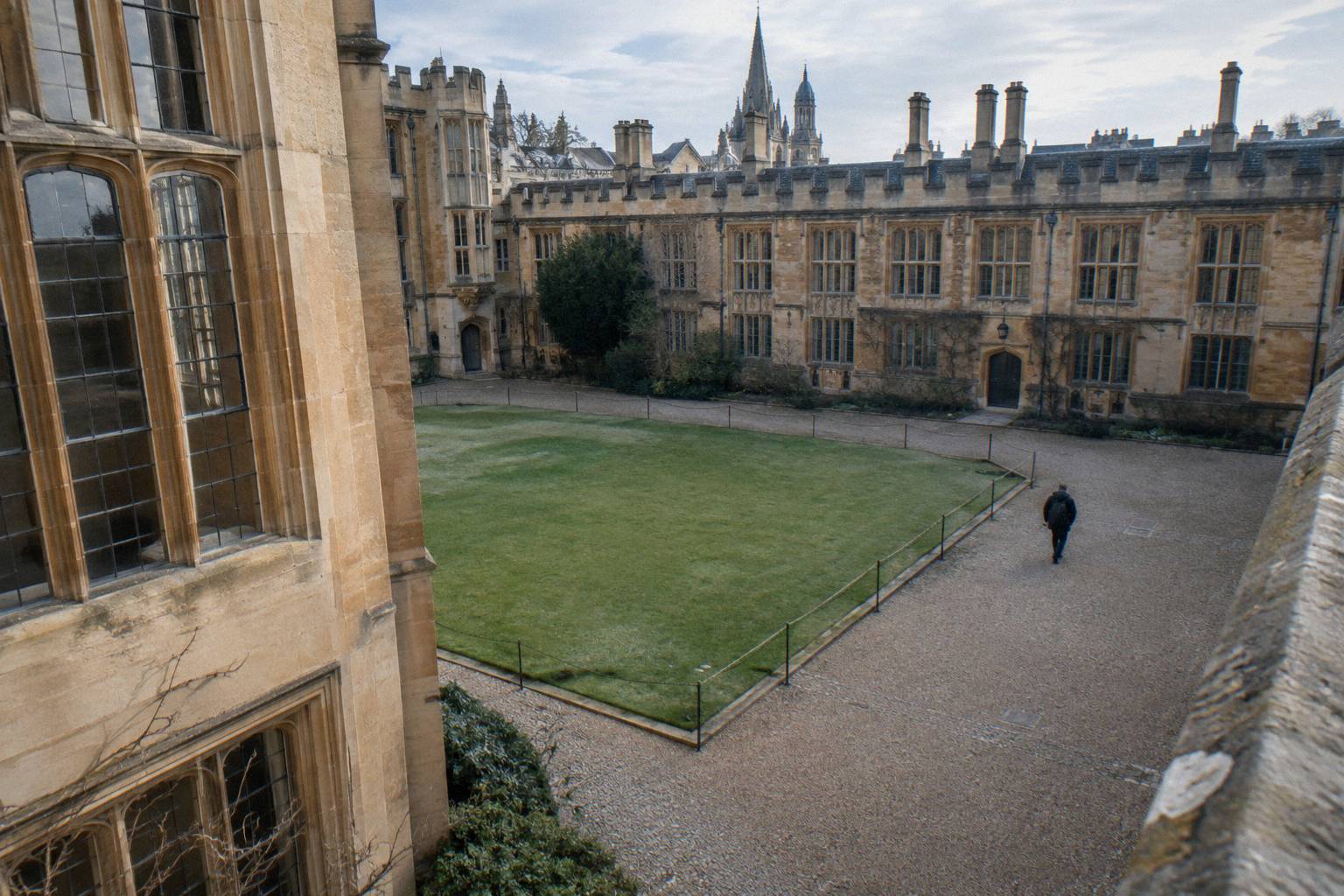
Next come the colleges that admit walk-in visitors at no charge. This is where budget planning matters most, because Oxford's colleges are not a uniform category. All Souls, Lincoln, Corpus Christi, Keble, St John's, Wadham, Lady Margaret Hall and Brasenose let casual visitors in free, Brasenose at the porter's discretion, and each has its own hours or conditions. The University maintains a per-college visiting list that states who is open and when, and it is the page to check on the morning you go. The guide to colleges you can visit for free carries the same detail.
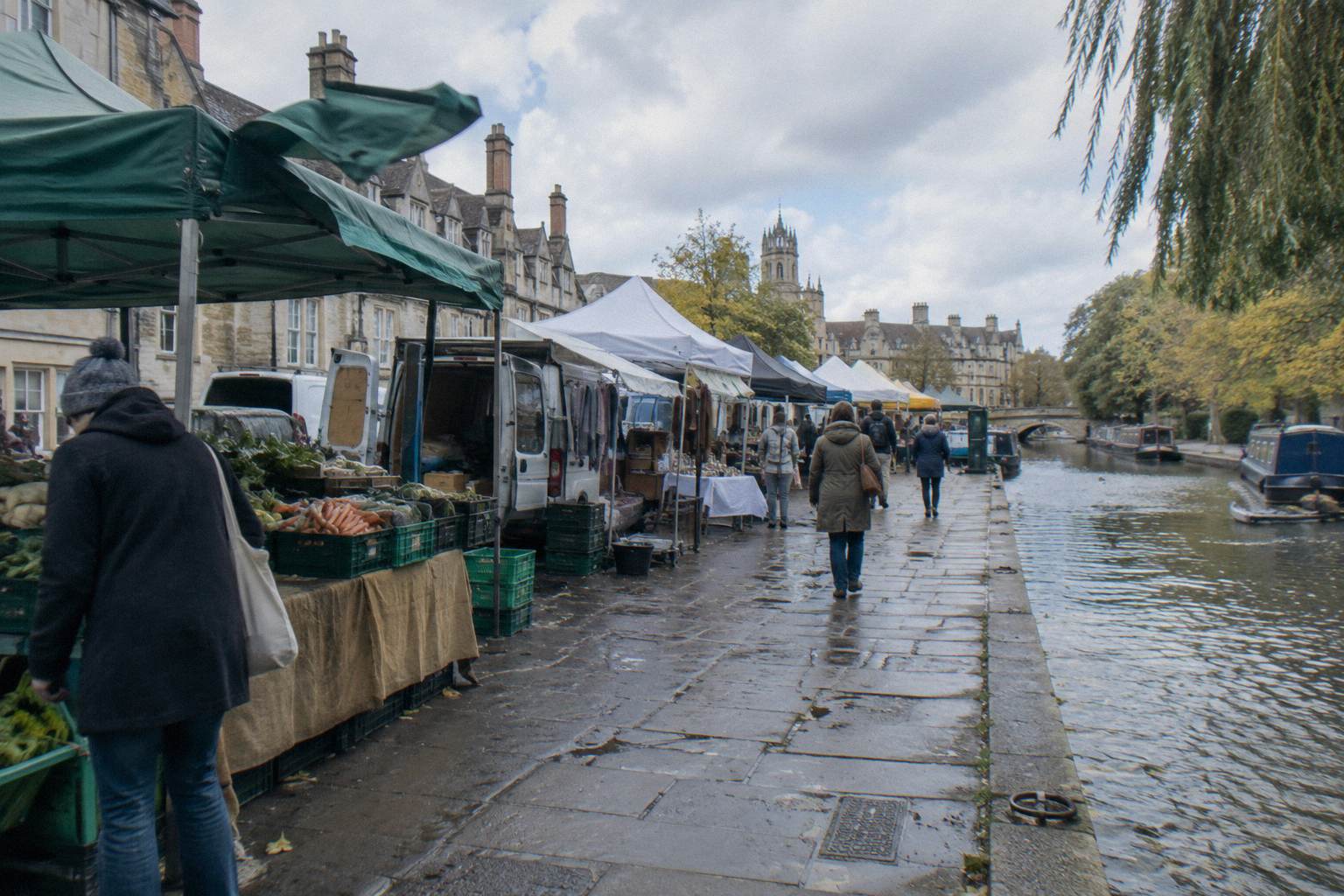
The outdoor layer costs nothing and needs no planning beyond weather. Christ Church Meadow runs along the riverside and is open public ground, entirely separate from the paid college beside it. Port Meadow gives open common land with the Thames along its edge. Jericho, the Covered Market's aisles and the plain streets of the centre, Carfax, High Street, Broad Street, are all free to walk, and the walking tours below cover that central ground with a guide.
Port Meadow deserves its own line in a budget plan because it is the one large free space you can reach on foot from the centre and spend real time in. The Port Meadow walking guide covers the ground, the riverside pubs and what you pass on the way. Pair it with Jericho on the return and you have a half day that costs nothing at all, unless you stop at a pub, which is a choice rather than an entry fee. The meadow layer is also the layer most first-time visitors skip, which is a shame, because it is free precisely because it is common land rather than a managed attraction.
Where Does The Money Go?
Money in Oxford goes to five predictable places: the charging colleges, the tower climbs, the Radcliffe Camera and Bodleian interior tours, Christ Church college and cathedral, and the major ticketed exhibitions. Magdalen, Merton, Trinity, Balliol and Oriel charge for entry, and Jesus is on tours only. Christ Church, Carfax Tower, the Botanic Garden and Blenheim Palace are ticketed sights.
Notice how narrow that list is. A visitor who skips every item on it still sees one of the great museum cities in England, several college quadrangles, two meadows and the whole of the architectural centre. A visitor who buys one item from it, say a single charging college or the St Mary tower view, adds a deliberate highlight without breaking the budget logic. The mistake is not spending, it is drifting into spending by assuming everything with a famous name carries the same rule.
| Paid item | Scope | Figure as stated |
|---|---|---|
| Magdalen College | Visitor entry | Ticketed |
| Trinity College | Visitor entry | Ticketed |
| Balliol College | Visitor entry | Ticketed |
| Merton College | Visitor entry | Ticketed |
| University College | Visitor entry | Ticketed |
| Oriel College | Visitor entry | Ticketed |
| Jesus College | Tours only | Ticketed |
| University Church tower | Tower climb, church itself free | Ticketed |
| Christ Church | College and cathedral, timed ticket | Ticketed |
| Carfax Tower | Tower climb | Ticketed |
| Botanic Garden | Garden entry | Ticketed |
| Blenheim Palace | Estate entry | Ticketed |
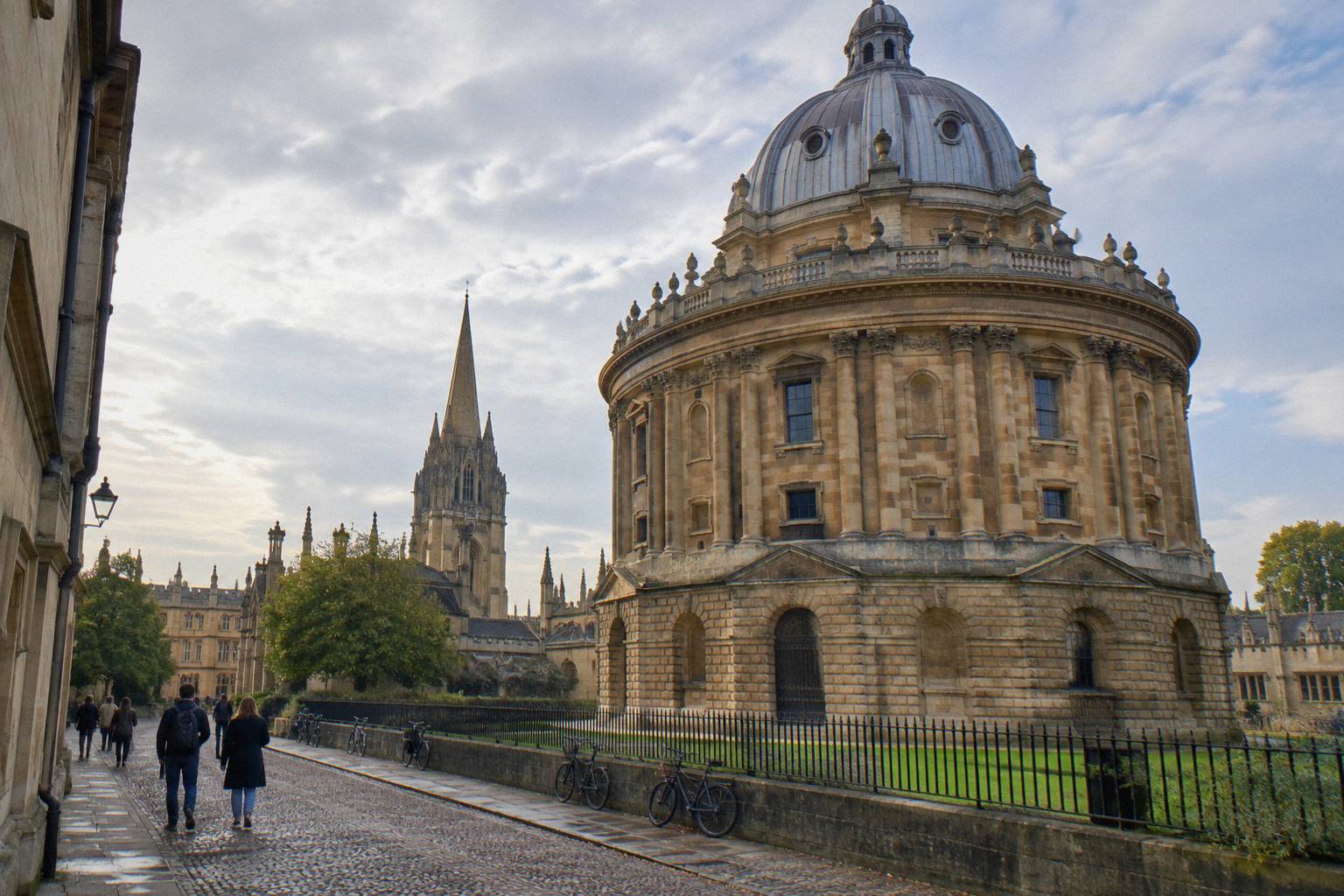
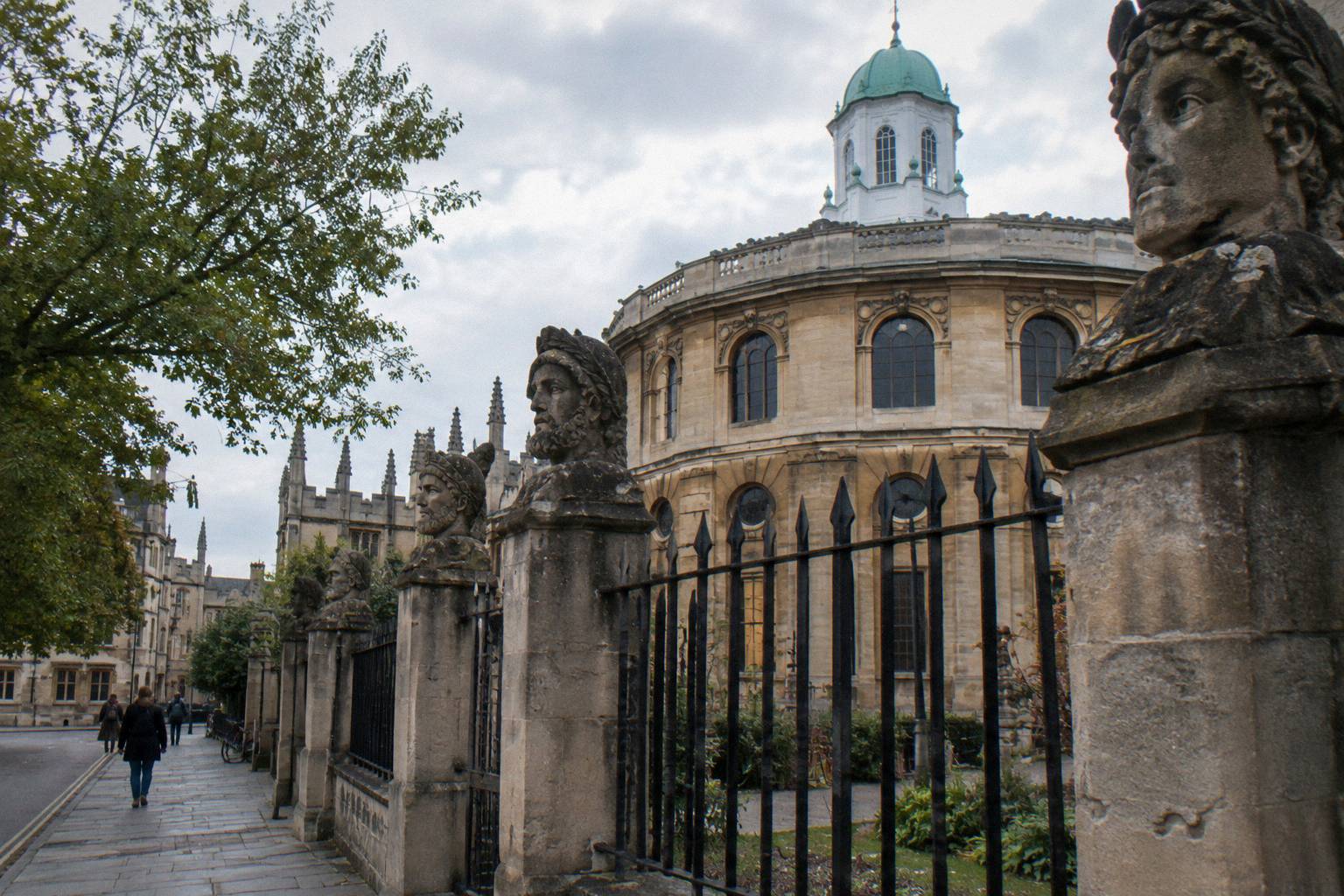
Two structures in the paid list deserve a second look. The University Church of St Mary the Virgin is free to enter, and only the tower climb carries the figure, so the church and the view are two separate decisions. The Radcliffe Camera works the same way: the building is one of the most photographed objects in the city precisely because it is free to look at from Radcliffe Square, while the interior is reachable only on a tour. Both are modelled here as two facts each, free outside and paid or tour-only inside, and the Radcliffe Camera walk-by guide does the same.
The Bodleian sits in the same family. The library's exterior, its courtyard approaches and the surrounding square cost nothing to see, and the free walking tours pass through that central ground. Going inside the reading rooms or joining a library tour is the paid or ticketed part, and the Bodleian free-visit guide separates exactly what you can see without a ticket from what you cannot. For a budget plan, the useful fact is that the most photogenic parts of the library complex are exterior parts.
The other structure worth naming is the colleges that do not admit casual visitors at all. Pembroke, Worcester for residents only, Hertford during building work to 2027, and Queen's on tours and Evensong only, are not budget decisions, they are access decisions, and no ticket bought elsewhere changes them. This is why the free-college list above is the one to plan around rather than a general assumption that colleges open their gates.
Which Free Walking Tours Cover This?
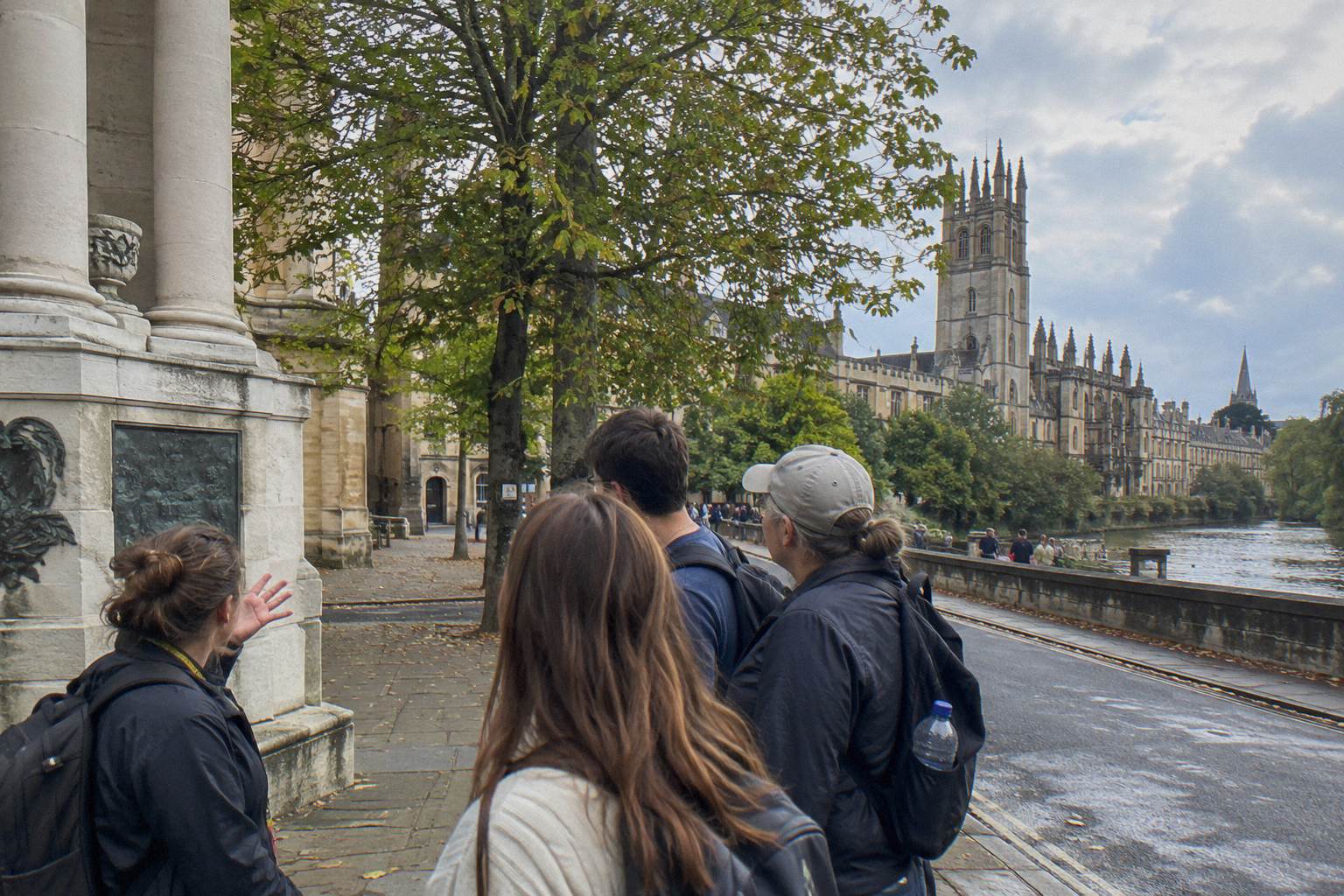
The free walking tour layer on GuruWalk has four walks, all running in English and one of them also in Italian. Two sit in the History And Town category and two in Colleges And University. Three meet on Broad Street, two of those at the Weston Library steps and one at the Oxfam shop at number 17, and one meets at the Martyrs' Memorial on Magdalen Street. Every walk is free to join, with no ticket and no fixed fee.
The walk with the deepest review pool is the Town And Gown History Walk, guided by David, rated 4.97 out of 5 across 148 GuruWalk reviews, two hours long, meeting at the Weston Library steps on Broad Street. The University And Colleges Walk, guided by Iryna, runs two hours from the Martyrs' Memorial at the junction of St Giles', Magdalen Street and Beaumont Street, rated 4.47 out of 5 across 15 GuruWalk reviews. The Student's Tour, 2 Hours, guided by Kailin, meets at the Oxfam shop at 17 Broad Street, rated 4.2 out of 5 across 5 GuruWalk reviews.
The Bilingual Walk, 1 Hour 30, guided by Michael, is the related tour for this article. It runs an hour and a half in English and Italian from the Weston Library steps on Broad Street, rated 4.47 out of 5 across 17 GuruWalk reviews, and it is the shortest walk on the roster, which suits a budget day where the walk is one block among several rather than the whole plan. For Italian speakers it is the only walk on the roster that removes the language barrier entirely, which is a fact worth more than any saving on a day when comprehension is the point.
| Walk | Category | Duration | Languages | Rating on GuruWalk | Meets at |
|---|---|---|---|---|---|
| Town And Gown History Walk | History And Town | 2 hours | English | 4.97 out of 5, 148 reviews | Weston Library steps, Broad Street |
| Bilingual Walk, 1 Hour 30 | History And Town | 1 hour 30 | English and Italian | 4.47 out of 5, 17 reviews | Weston Library steps, Broad Street |
| University And Colleges Walk | Colleges And University | 2 hours | English | 4.47 out of 5, 15 reviews | Martyrs' Memorial, Magdalen Street |
| Student's Tour, 2 Hours | Colleges And University | 2 hours | English | 4.2 out of 5, 5 reviews | Oxfam shop, 17 Broad Street |
One boundary matters for budget planning: none of these walks enters a paid college, the Bodleian, the Radcliffe Camera or Christ Church. Each starts at its meeting point and passes through the centre with a guide, and the interiors you pay for are separate visits you make on your own. If going inside colleges is the point of your day, the pairing to read is whether free walking tours go inside the colleges.
Because every walk is free to join with the guide paid in tips, the tour layer of a budget day can cost nothing at all, and what you give is your decision. None of the four walks carries an extra-cost flag on GuruWalk. The walks also answer a practical budget problem: they cover the central geography efficiently, which saves both money and the legwork of working out which quadrangle is which.
Durations cluster tightly, which makes the choice a matter of theme and language rather than time. Three walks run 2 hours and one runs 1 hour 30 minutes, and none demands a whole half day. A budget plan can drop a walk into the morning, spend the afternoon in a free museum or on the meadow, and still feel unhurried. The how-long-is-a-free-tour piece breaks the timing question down further.
Mistakes That Trip People Up At Oxford On A Budget
The classic budget mistakes in Oxford are assuming all colleges are free, assuming all museums are entirely free, paying for a tower without knowing the church beneath it is free, and treating Christ Church Meadow and Christ Church college as one attraction. Each mistake comes from merging two facts into one. The corrections are simple: check the per-college list, separate permanent collection from special exhibition, and split every sight into its free part and its paid part.
The first mistake is the blanket college assumption. Magdalen, Merton, Trinity, Balliol, University College, Oriel and Jesus all charge, Pembroke, Worcester, Hertford and Queen's do not admit casual visitors at all, and only the eight named earlier let you walk in for nothing. A visitor who plans the day around "the colleges" as one category will either pay unexpectedly or find a gate shut. The per-college visiting list on the University's own site is the morning-of check.
The second is the museum exhibition trap. The Ashmolean is free, and its major special exhibition is ticketed, and the two facts live side by side on the same visit. Decide before you arrive whether the exhibition is part of your plan, because the free permanent collection is large enough to fill a morning on its own.
The third is the tower and church confusion at St Mary the Virgin. The church is free to enter and the tower climb is ticketed, so a visitor who wants the view pays once, and a visitor who wants the interior pays nothing. The same split applies to the Radcliffe Camera, free to admire from Radcliffe Square and tour-only inside, and to Christ Church, where the meadow is open public ground and the college and cathedral need a paid timed ticket, with services free to attend.
The fourth is planning around closed or inaccessible places. The Christ Church Picture Gallery is closed for renovation and is not a visitable sight. St George's Tower at Oxford Castle is closed from 9 to 27 November, so it is not a current visit in that window. Hertford's building work runs to 2027. A budget plan that includes a closed sight fails twice, once on access and once on the wasted walk across town.
The fifth is the quiet one: assuming the free walks cost something and skipping them. All four GuruWalk walks are free to reserve and join, none carries an extra-cost flag, and they are the cheapest way to give the day a spine. The meeting points guide maps where each one starts, three on Broad Street and one at the Martyrs' Memorial. A related slip is assuming you must book far ahead; the booking question answered plainly covers what reserving on GuruWalk actually involves.
A final mistake is treating the free layer as a consolation prize rather than the main event. The Ashmolean's permanent collection, the Pitt Rivers' displays and the open meadows are not lesser versions of paid sights, they are the substance of the city. Visitors who arrive expecting to pay for the good parts and get the free parts as a bonus have the hierarchy backwards, and their spending shows it.
Common Questions
What To Do In Oxford On A Budget? Free Options First?
Build the day from the free layer: a museum morning at the Ashmolean, Pitt Rivers or Natural History, a free walk-in college quadrangle, Christ Church Meadow or Port Meadow in the afternoon, and a free GuruWalk walking tour to hold the centre together. Four free walks run on GuruWalk, all in English. Paid items, one charging college or one tower, become single deliberate choices.
Are Oxford's Museums Really Free?
Yes, the Ashmolean, Pitt Rivers, Natural History, History of Science and Modern Art Oxford cost nothing to enter. The Museum of Oxford is normally ticketed (adults GBP 4) and free on set free entry days. The one condition sits at the Ashmolean, whose major special exhibition is ticketed while the permanent collection stays free. The free-entry layer needs no ticket and no booking for the permanent displays.
Can You Visit Oxford Colleges Without Paying?
Some, not all. All Souls, Lincoln, Corpus Christi, Keble, St John's, Wadham, Lady Margaret Hall and Brasenose admit walk-in visitors free, Brasenose at the porter's discretion, each with its own hours. Magdalen, Merton, Trinity, Balliol, University College, Oriel and Jesus charge, and Pembroke, Worcester, Hertford and Queen's do not admit casual visitors. Check the University's per-college list on the day.
How Much Does A Free Walking Tour Cost?
Nothing to join. All four walks on GuruWalk are free to reserve and free to walk, with the guide paid in tips and the amount entirely your decision. No walk carries an extra-cost flag on its GuruWalk page. The tours run from about an hour and a half to two hours, in English, with one walk also in Italian.
Is Christ Church Free To Visit?
Christ Church Meadow, the riverside walking ground, is free and open. Christ Church college and cathedral need a paid timed ticket, with services free to attend. The meadow and the college are two separate visits, and a budget day can take the free meadow and skip the ticket without missing the riverside walk.
What Is The Best Free View In Oxford?
Radcliffe Square is the strongest free view in the city: the Radcliffe Camera, the Bodleian's exterior and the surrounding college walls, all seen from open ground with no ticket. The Camera's interior is tour-only, so the square itself is the sight. For open sky and water rather than architecture, Port Meadow and the river paths along the Thames and the Cherwell cost nothing.