Is St Giles' Fair Free To Enter?
St Giles' Fair is free to enter and the rides inside are charged. Here is exactly what costs money, what does not, and which free GuruWalk walks run nearby.
In Short
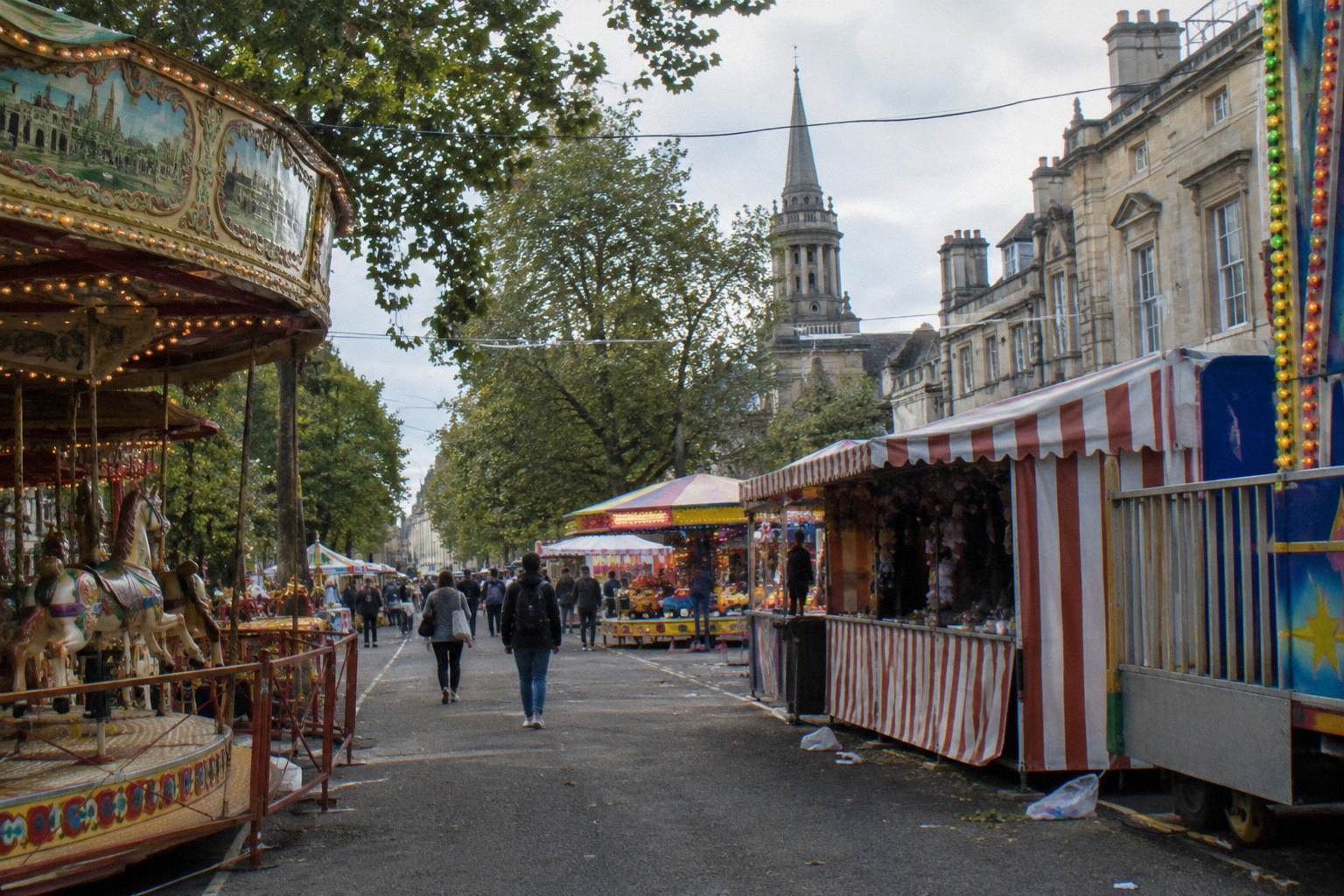
Yes. St Giles' Fair is free to enter: the street is open to walk through and no gate, ticket or entry charge exists at the fair itself. The rides and many of the stalls inside are charged and each ride operator sets its own price. The fair runs over two days in early September on St Giles', the street that runs north from the Martyrs' Memorial, and the fair's own detail sits with Oxford City Council.
This question sits inside the free walking tour meeting points guide, because the fair's street is also where one of the GuruWalk walks meets.
What Is The Short Answer?
Yes, St Giles' Fair is completely free to enter. The fair takes over St Giles' street, which runs north from the Martyrs' Memorial at its junction with Magdalen Street and Beaumont Street, and there is no gate, fence or ticket between you and it, so you can walk the full length, browse every ride and stall, and pay nothing unless you choose to ride.
The distinction matters more than it sounds. Plenty of Oxford's big draws split the same way: the University Church of St Mary the Virgin is free to enter while its tower climb is ticketed at GBP 7, and Christ Church Meadow is a free riverside walk while Christ Church college and cathedral need a paid timed ticket. St Giles' Fair follows the same pattern in miniature. The event is a public street fair; the attractions inside it are a private fairground, and fairground rides are sold per ride by the operators who bring them.
So the honest budget answer for a visitor is simple. Seeing the fair, soaking up the noise, walking among the rides and photographing the street from end to end: free, all of it, no conditions. Putting a child on a carousel or a teenager on whatever looms largest: charged, per ride, at prices set by each ride operator rather than by the fair or the council. There is no wristband, no day pass and no entry bundle, so plan on paying per ride if riding is part of the plan.

One framing helps before the detail. The fair is not a ticketed attraction with a free fringe; it is a free public event with paid attractions scattered through it. Nobody checks whether you intend to ride. Plenty of people come every year, ride nothing, eat nothing and treat the whole evening as a free spectacle, and that is a completely normal way to do it. Others come for the rides and pay accordingly. Both versions cost exactly what the visitor chooses to spend beyond the nothing that entry demands.
For anyone combining the fair with the rest of the city, the geography works in your favour. St Giles' sits at the top of the centre, the Martyrs' Memorial anchors its southern end, and Broad Street with the Weston Library steps, where two of the GuruWalk walks meet, sits a few minutes south of it. A day built around free sights and a free walk can end at the fair without spending anything on any of it.
When Does The Fair Run?
The fair runs over two days in early September each year, taking over the street of St Giles' completely for that period, in 2026 on Monday 7 and Tuesday 8 September, 11am to 11pm, as set by Oxford City Council. What stays stable year to year is the shape: two days, one street, and a fairground assembled and dismantled around it.
The September slot is the one fixed fact worth planning around. It means the fair closes out the summer season rather than opening it, and it means the weather question is a live one in a way it would not be for a May event. It also means the street is unavailable as a through route while the fair stands: St Giles' fills with rides and stalls, and the normal traffic pattern of the street suspends for the duration. Anyone whose plans depend on driving that particular stretch should check the council's road information rather than assuming the street behaves as it does the rest of the year.
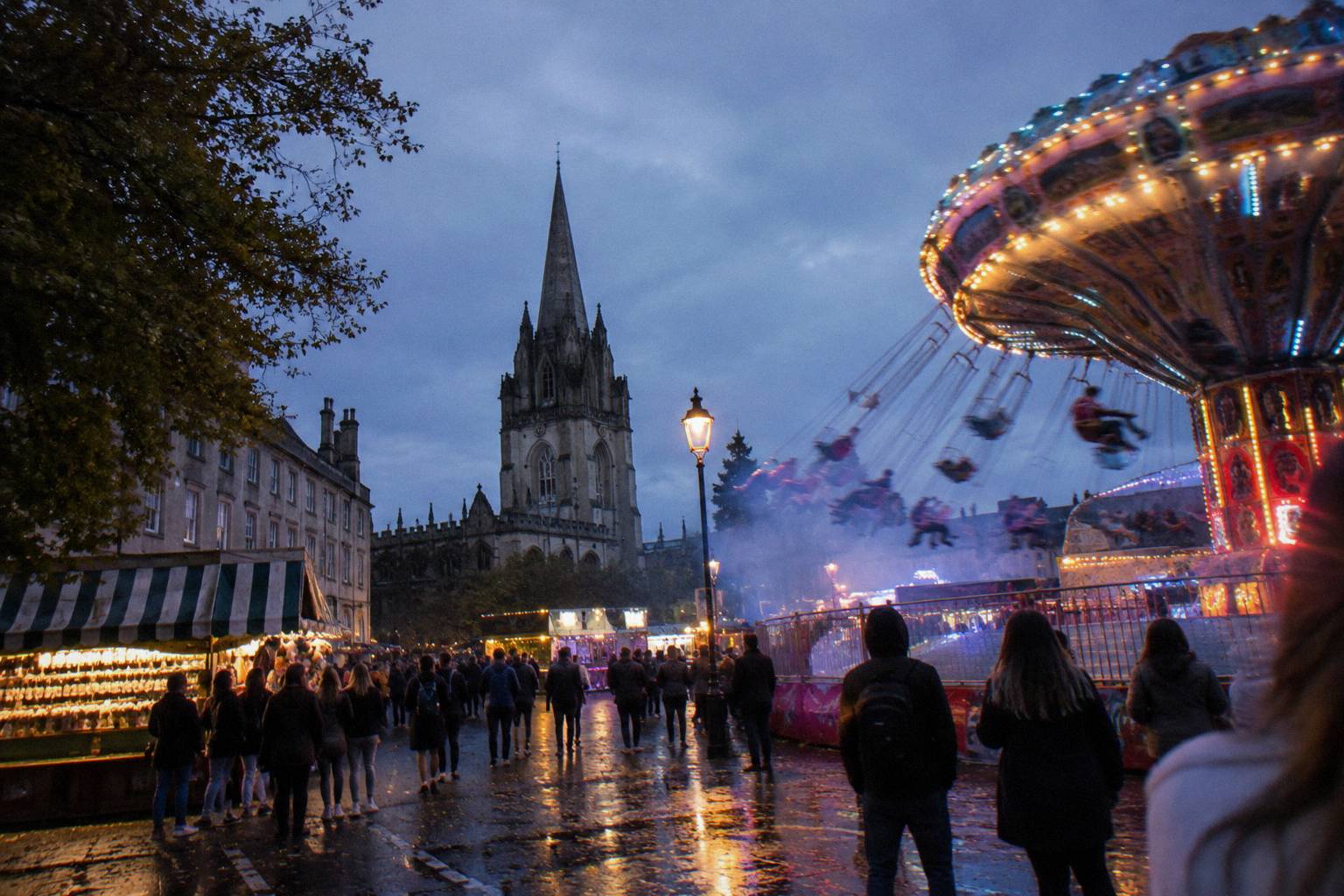
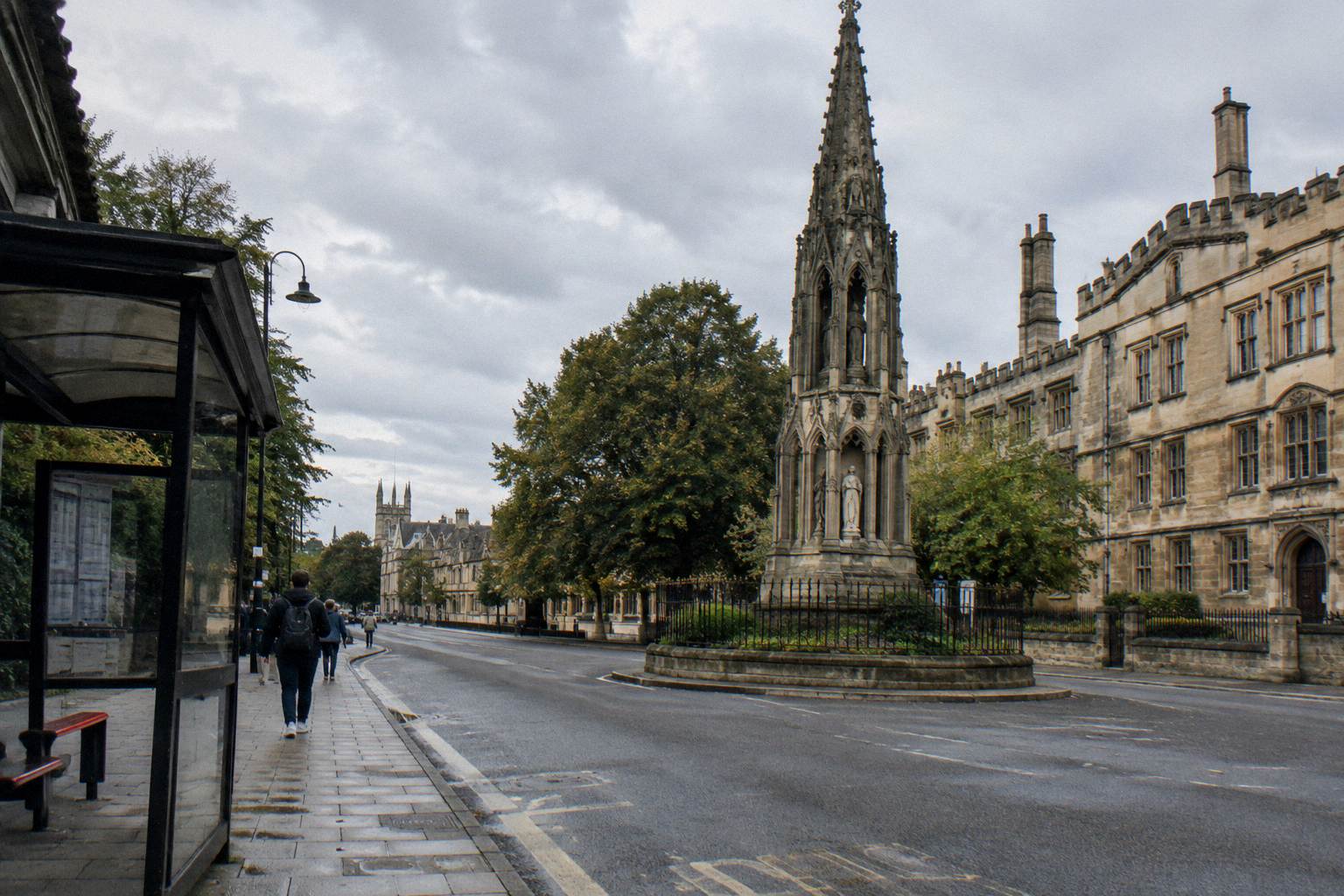
The fair's own character comes from that street. St Giles' is wide, tree-lined and lined with stone buildings, including the church that gives the street its name, and the fair uses the whole of it. Rides stand where traffic normally flows, stalls run along the edges, and the Martyrs' Memorial marks the southern gateway to all of it. The memorial matters to visitors for a second reason: it is the meeting point of one of the free GuruWalk walks, the University And Colleges Walk, which meets at the Martyrs' Memorial on Magdalen Street and runs for 2 hours in English. Standing at that junction during the fair puts you at the intersection of the city's guided-walk network and its biggest street party.
Beyond the two days themselves, the fair runs 11am to 11pm on both days, and the council's own pages are the place for the detail of any given year. Treat everything time-specific as a check-before-travel item and the free-entry fact as the thing that does not change.
What Costs Money Inside?
The rides cost money, charged per ride by the individual ride operators, and many of the food and game stalls are charged too. Prices are set by each operator, so no figure is printed here. Entry, walking the street, watching the rides and taking in the atmosphere cost nothing. The split is clean: the event is free, the attractions within it are not, and each operator sets its own prices on the day.
That per-ride structure is worth spelling out because it shapes how families experience the fair. There is no entry bundle and no pay-once-ride-all arrangement. A visitor who rides three things pays three operators three separate amounts, and a visitor who rides nothing pays nobody. Budgeting for the fair is therefore not a question of one ticket price but of counting rides, and the counting is easier to do on the street, where every ride displays its own pricing, than in advance from home. The rest of the planning pages sit on Free Things To Do In Oxford.
| What you do at the fair | Free or charged | Notes |
|---|---|---|
| Walk into the fair on St Giles' | Free | No gate, ticket or entry charge |
| Walk the street end to end | Free | Street is closed to traffic and open to pedestrians |
| Watch the rides and stalls | Free | No charge to look or photograph |
| Ride any fairground ride | Charged | Per ride, priced by each ride operator |
| Food and drink stalls | Charged | Stall prices set by stallholders |
| Fairground games | Charged | Per play, set by the stallholder |
The comparison with the rest of Oxford's free-and-paid landscape puts the fair in context. The Ashmolean, the Pitt Rivers, the Oxford University Museum of Natural History, the History of Science Museum and Modern Art Oxford are all free to enter, with the Ashmolean's major special exhibition ticketed. Christ Church Meadow is a free walk; the college beyond it needs a paid timed ticket. The fair is the same idea rendered as a two-day event: a free public shell around paid private attractions, with the difference that the fair's paid parts are per-ride fairground charges rather than set admission prices.
For a visitor assembling a free day around the fair, the pieces stack well. The free museums sit south and east of St Giles', the Covered Market is free to browse, and the free riverside walks, Christ Church Meadow among them, are all reachable without spending anything. Add one of the free GuruWalk walks and the fair itself as the evening spectacle, and the only money a visitor must part with on such a day is whatever food or rides they choose at the fair, plus anything they buy under cover of the stalls. The budget-first guide to free things in Oxford walks through that stack in order.
One practical note belongs here rather than in a later section. The fair's location at the top of St Giles' means the walks that meet on Broad Street, a short way south, put you within easy reach of the fairground by foot, and the walk that meets at the Martyrs' Memorial puts you at its southern gateway. The walks' own pages state their schedules, so a visitor hoping to do a walk and then the fair on the same day should read the walk's own GuruWalk page for its times before building the plan. The geography cooperates; the calendars need a check.
Which Free Walking Tours Cover This?
Four free walking tours operate on GuruWalk in Oxford, all offered in English with one also available in Italian. None is a dedicated fair tour, and no walk's page describes a fair route; they cover the city generally. Three of the four meet on or beside Broad Street, a short walk south, while the fourth begins at the Martyrs' Memorial on Magdalen Street, right at the southern end of St Giles'.
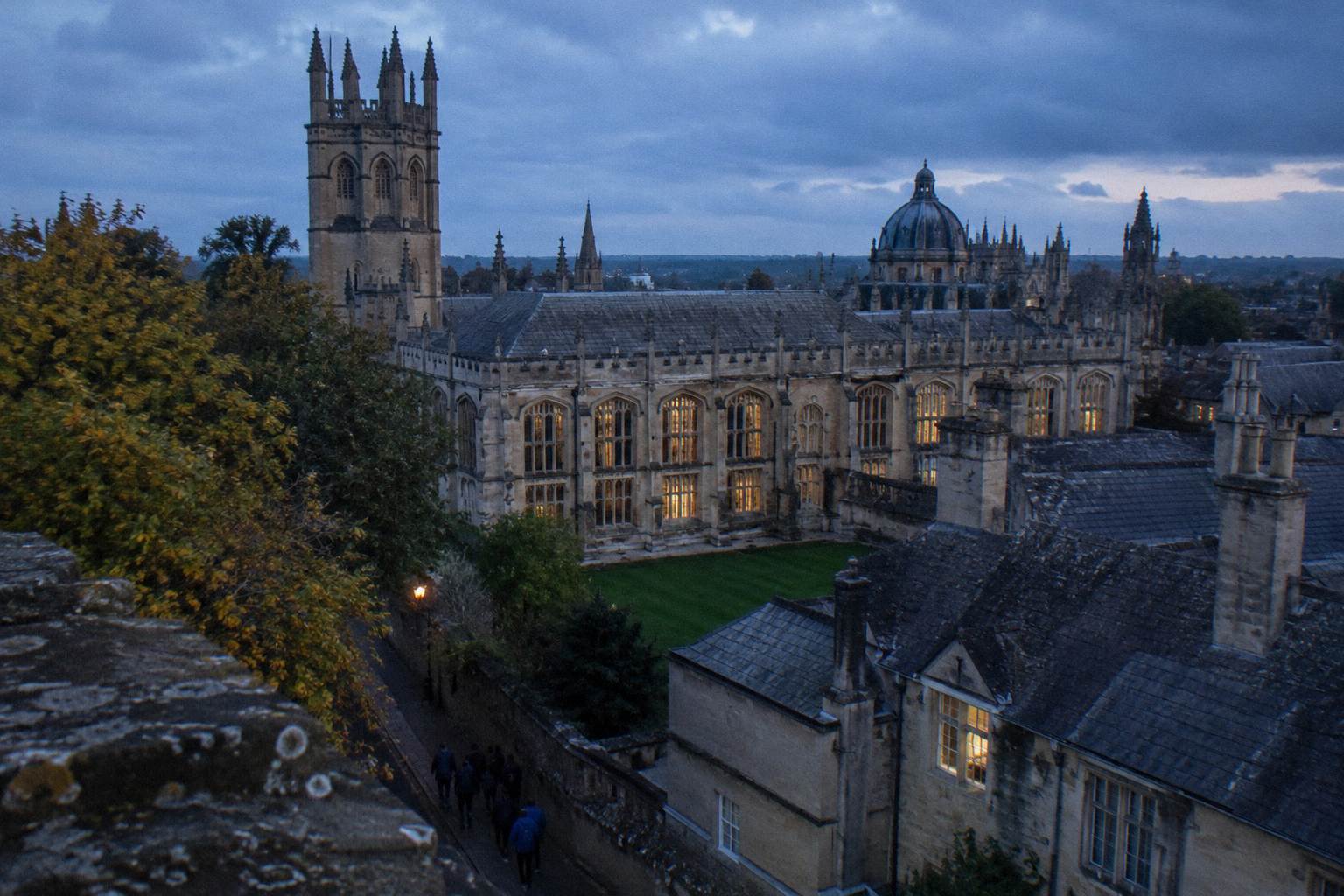
The walk with the closest tie to the fair's ground is the University And Colleges Walk, a 2-hour English walk that meets at the Martyrs' Memorial, Magdalen Street, rated 4.47 out of 5 across 15 GuruWalk reviews. The memorial stands at the junction of St Giles', Magdalen Street and Beaumont Street, which is effectively the front door of the fair. A walker who finishes that walk steps out almost directly into the fairground's southern end, which makes it the natural pairing for a fair visit, though nothing on the walk's own page describes the fair itself and no walk should be booked as a way to tour the fair.
The two walks that meet at the Weston Library steps on Broad Street sit a few minutes further south, and Broad Street connects up to St Giles' in a straight line past the junction. The Town And Gown History Walk, rated 4.97 out of 5 across 148 GuruWalk reviews, runs 2 hours in English with guide David. The Bilingual Walk, 1 Hour 30, listed as Classic Eternal Oxford on its GuruWalk page, runs 1 hour 30 minutes in English and Italian with guide Michael, rated 4.47 out of 5 across 17 GuruWalk reviews; its shorter length and second language make it the easiest of the four to slot into a day that needs to end at the fair by early evening. A fourth walk, the Student's Tour, 2 Hours, meets at the Oxfam shop at 17 Broad Street and runs 2 hours in English with guide Kailin; it is listed on GuruWalk at 4.2 out of 5 across 5 reviews.
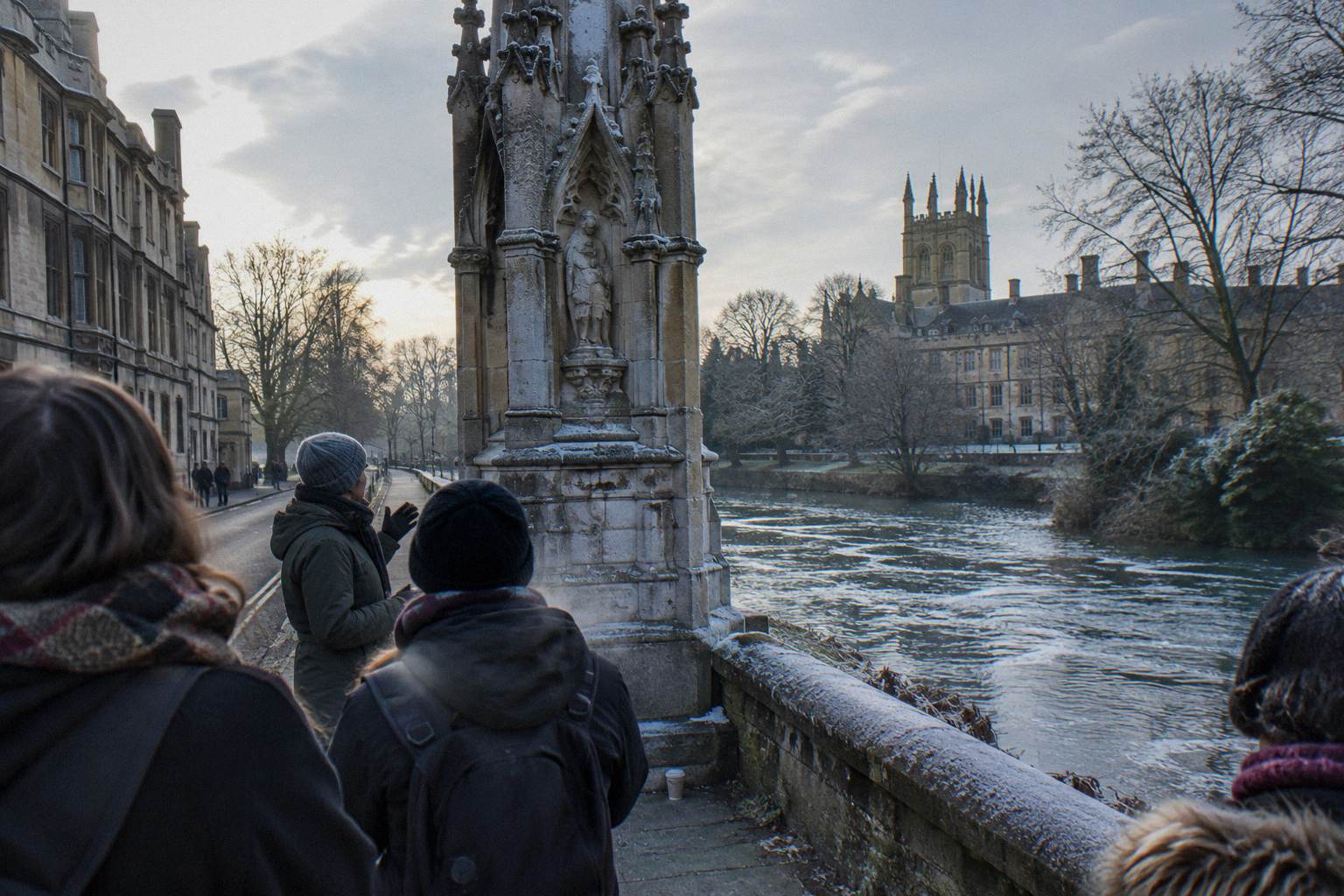
Every one of these walks is free to join, with no ticket and no fixed fee: each guide is paid in tips, reservations happen on GuruWalk, and no walk carries any extra-cost flag. The table below puts the four side by side.
| Walk (decision name) | Meets at | Duration | Language | Rating on GuruWalk |
|---|---|---|---|---|
| Town And Gown History Walk | Weston Library steps, Broad Street | 2 hours | English | 4.97 out of 5, 148 reviews |
| Bilingual Walk, 1 Hour 30 | Weston Library steps, Broad Street | 1 hour 30 | English and Italian | 4.47 out of 5, 17 reviews |
| University And Colleges Walk | Martyrs' Memorial, Magdalen Street | 2 hours | English | 4.47 out of 5, 15 reviews |
| Student's Tour, 2 Hours | Oxfam shop, 17 Broad Street | 2 hours | English | 4.2 out of 5, 5 reviews |
Two cautions keep the pairing honest. First, none of these walks goes inside a paid college, the Bodleian, the Radcliffe Camera or Christ Church, and none should be expected to; their meeting points and neighbourhoods are what the roster states, and a walk title is a title, not a route. Second, the fair itself is a self-guided spectacle. The walks give you the city, and the fair gives you the evening, and the two connect only through geography. Anyone wanting a sense of how these walks differ in depth can read the free-versus-paid walking tours comparison, and anyone curious about whether walks enter the colleges at all has a straight answer in whether free tours go inside the colleges.
The meeting-point geography deserves one last note because it is genuinely convenient. Three of the four walks meet on Broad Street in some form: two at the Weston Library steps and one at the Oxfam shop at 17 Broad Street. The fourth meets at the Martyrs' Memorial. Both streets lie on the same north-south line through the centre, so a walk ending on Broad Street flows naturally up to the fair, and a walk ending at the memorial arrives at the fair's gateway directly. In fair week, that single fact is worth planning a whole day around.
Mistakes That Trip People Up At St Giles' Fair
The recurring mistakes are expecting a ticket where none exists, expecting the rides to be free because entry is, and assuming St Giles' street behaves normally on the fair's two days. Entry has always cost nothing, rides are charged per ride with no published prices, the street closes to its usual traffic and opens only to pedestrians, and a fourth mistake is treating a nearby walking tour as a fair tour, which no walk's page claims to be.
The first mistake is the rarest but the costliest in planning terms: turning up expecting to pay at a gate. There is no gate. The fair is a street event and the street is simply open, which also means there is no capacity control and no booking concept for entry. Anyone selling a St Giles' Fair entry ticket is selling something the fair does not require, and the same free-entry fact that makes the fair attractive also makes it un-gateable.
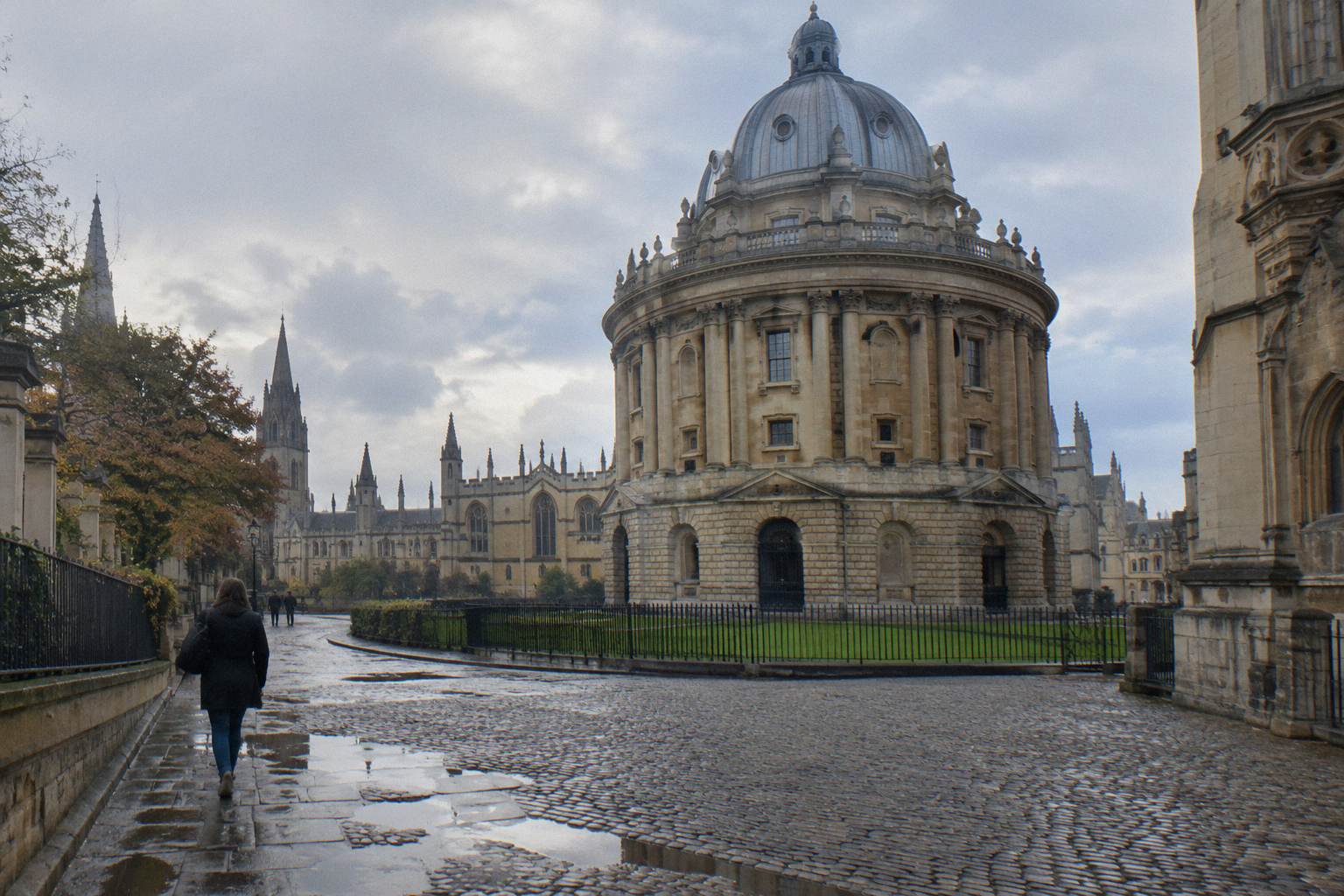
The second mistake is budgeting as though the free label covered everything inside. It does not. The fair is free to enter and charged to ride, and the charges are per ride, per operator, priced on the day. Families get caught by this more than anyone: entry with three children costs nothing, but three children who each want two rides are six ride payments across whatever operators own those rides. The honest planning move is to treat ride money as a separate pocket from the free day around it, and to let the on-street prices, visible at each ride, do the deciding.
The third mistake is logistical. St Giles' is a working street for the other fifty weeks of the year, and during the fair it is not: rides and stalls occupy it, and its normal pattern suspends. Anyone routing a car, a delivery or a tight schedule through that street on the fair's two days should expect it to be unavailable and should check Oxford City Council's own road notices, which are the authority on closures, before committing. The pedestrian, by contrast, is the fair's honoured guest: the street exists for two days precisely for people on foot.
The fourth mistake belongs to tour planners. The walks in the table above meet on and around the fair's ground, and it is tempting to read one of them as a guided version of the fair. No walk's page describes the fair, a fair route or fair content. What the walks offer is the city's history and colleges; what the fair offers is fairground spectacle; the pairing works because the two sit in the same small corner of the centre, not because one covers the other. Book the walk for the walk, and let the fair be the free finale.
Common Questions About St Giles' Fair
Is St Giles' Fair Free To Enter?
Yes, completely free. The fair stands on the street of St Giles' and there is no gate, fence, ticket or entry charge of any kind; walking the street, watching the rides and taking in the whole spectacle costs nothing. Charges apply only to the rides, food stalls and games inside, each priced by its own operator. The free-entry fact is stable year to year.
Do You Pay For The Rides At St Giles' Fair?
Yes, the rides are charged, per ride, by the individual ride operators who bring them. No wristband or day pass applies, so no figure is printed here, and each ride displays its own pricing on the street. Entry and everything you can do on foot, looking, walking and photographing, remains free throughout the fair.
When Does St Giles' Fair Take Place?
The fair runs over two days in early September each year on St Giles'. In 2026 it ran on Monday 7 and Tuesday 8 September, 11am to 11pm; Oxford City Council's own pages carry each year's detail, including the street arrangements. Planning around early September is safe; planning around a specific date without checking the council's page is not.
Where Exactly Is The Fair Held?
On St Giles', the wide street running north from the Martyrs' Memorial at the junction of St Giles', Magdalen Street and Beaumont Street. The memorial is effectively the fair's southern gateway, and it is also the meeting point of the University And Colleges Walk, one of the four free GuruWalk walks. Broad Street, where three of the walks meet, lies a few minutes south on the same line.
Can You Visit The Fair Without Spending Anything?
Yes. Entry is free, the street is open to pedestrians for its full length, and the rides and stalls are something to watch as much as to use. Many visitors treat the fair purely as a free evening spectacle and pay nothing at all. Combining it with free museums, free college walks-in and a free GuruWalk walking tour makes a full day where the only possible spend is food and rides you choose yourself.
Is There A Ticket Or Booking For Entry?
No. Entry requires no ticket, booking or registration, and there is no capacity control. You arrive on foot and walk in. Booking applies only to the free walking tours that meet nearby: they are reserved on their own GuruWalk pages, free to join with no fixed fee, and separate from the fair itself.