Is It Safe To Walk Around Oxford At Night?
What the evening city looks like on foot, which open spaces and lit streets carry the night-time visitor, and how the free GuruWalk walking tours fit into a safe Oxford day.
In Short
Oxford's centre is a compact set of open public streets and squares, and the evening city is walked rather than driven. The free walking tours on GuruWalk are reservations with fixed durations, so night-time exploring is self-guided by nature. The open spaces that stay open at any hour, such as Radcliffe Square, Broad Street and the riverside meadows, are the natural evening route. Ticketed sights, from Christ Church to the Botanic Garden, are daytime visits and play no part in a night walk.
This question sits inside the routes and stops guide on Free Things To Do In Oxford, and it comes up whenever a day trip from London runs long and the return train is late. The honest answer has two halves: what the city itself offers after dark, and where the paid and free pieces sit once the sun goes down.
Is It Safe To Walk Around Oxford At Night?
Yes, in the broad sense that Oxford's centre is a set of open public streets and squares, and the evening city is the same compact, walkable stone fabric you pass through by day, just emptier. Note, though, that the verified material here covers streets, meeting points and open spaces rather than night-time conditions, and the 4 free GuruWalk tours are reservations with set durations.
That framing matters more than it might sound. Oxford is a city whose main attractions are buildings, streets and squares rather than gated venues, and the streets and squares never close in the way a museum does. Broad Street, High Street, Radcliffe Square and Carfax are open public space, records in the city's own list of free street-level sights, and the stones do not change character at nine in the evening. The centre is also small in a way that few visitors expect. The four free walking tours on GuruWalk cover their ground in between 1 hour 30 minutes and 2 hours each, which tells you the historic core is a two-hour place on foot at a guided pace.
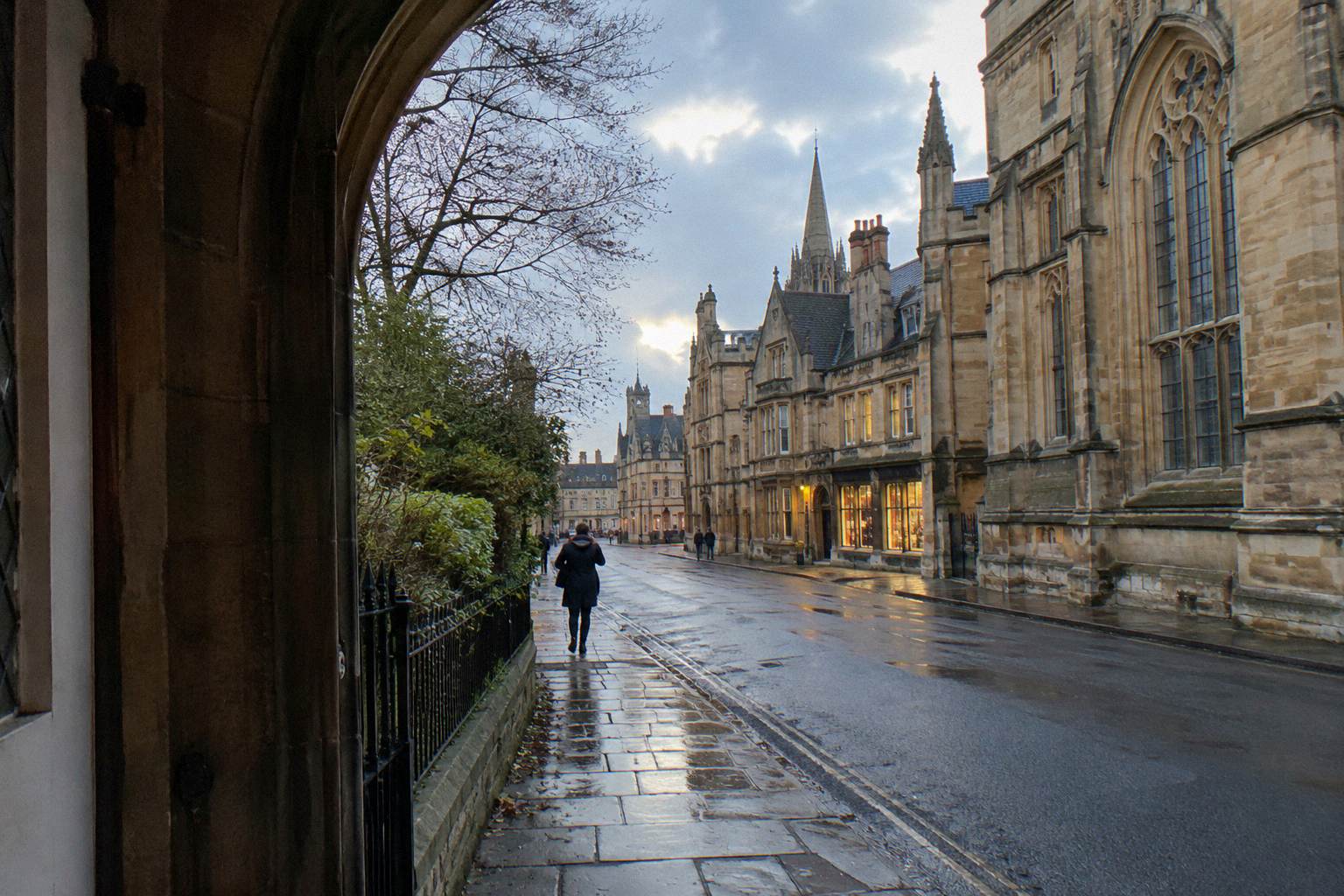
The evening therefore splits cleanly into two kinds of space. The first is the open street network: the Broad Street runs, Radcliffe Square, the lanes around the Sheldonian and the Bridge of Sighs, all of which are free to walk through and none of which involves a gate, a ticket or an attendant. The second is everything with a door. The Ashmolean, the Pitt Rivers, the Natural History museum and the Museum of the History of Science are free to enter as museums but they are daytime visits, and the Ashmolean's major special exhibition is ticketed on top of free general entry. The colleges are the sharpest line of all: most either charge for entry, restrict casual visitors entirely, or admit walkers only at stated hours, which makes them day sights in every practical sense. The University's own visiting page sets out which colleges admit visitors and on what terms: the University's guide to visiting colleges.
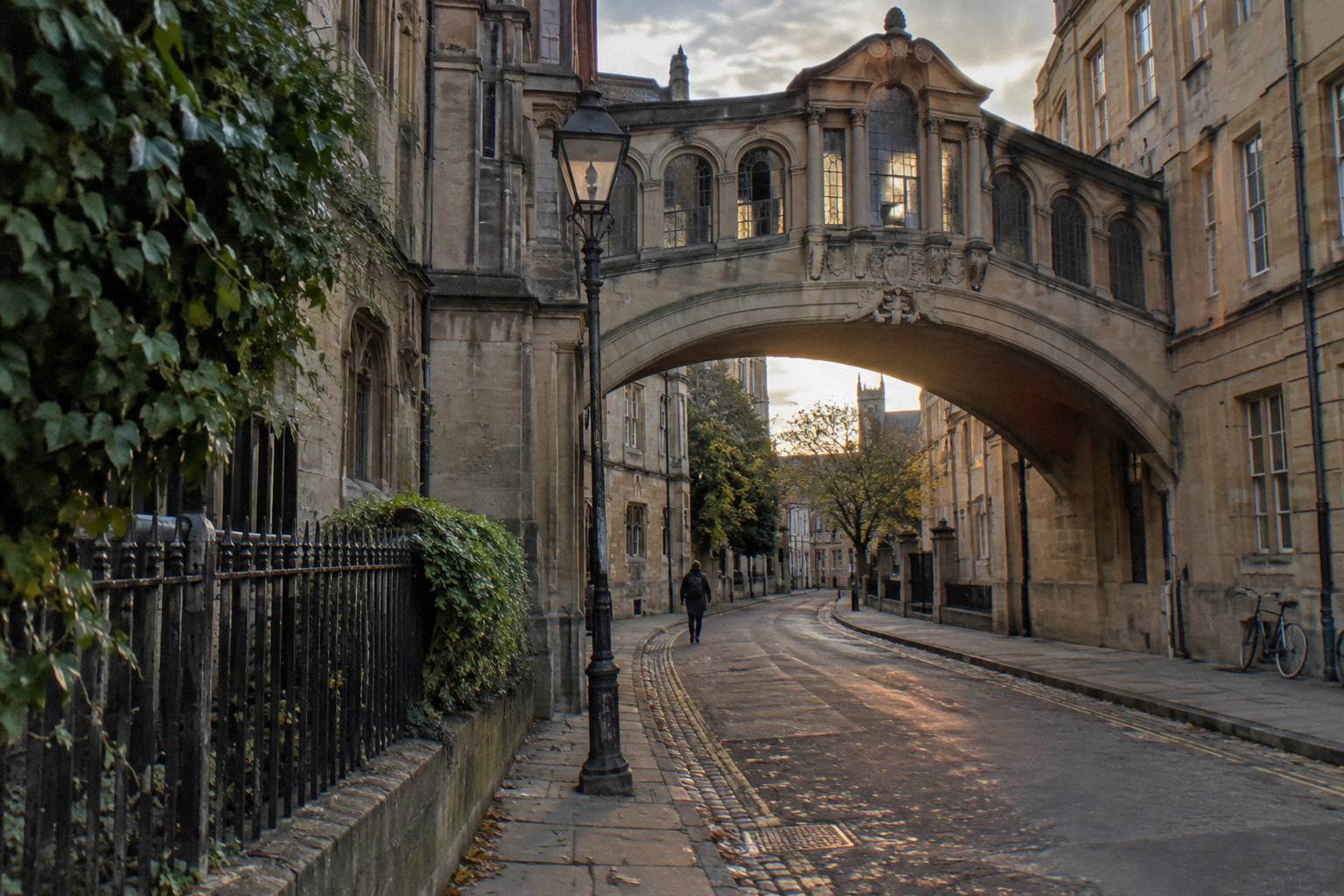
None of this is a safety claim about lighting, crowds or crime, and this site publishes nothing on those subjects because nothing verified sits behind them. What the facts do support is structural: a compact centre of open public space, a set of ticketed or gated sights that belong to the daytime, and a set of free open spaces that ask nothing of you at any hour. For a fuller picture of how the daytime pieces fit together, the day plan for a free day in Oxford works through the same streets in order.
Quick facts for the evening walker:
| Fact | Detail |
|---|---|
| Centre type | Open public streets and squares, free to walk at any hour |
| Walkable scale | The historic core takes 1 hour 30 minutes to 2 hours at guided pace |
| Free walking tours | 4 on GuruWalk, all in English, one also in Italian |
| Walk durations | 1 hour 30 minutes or 2 hours, per walk |
| Meeting points | Weston Library steps (2 walks), Oxfam shop at 17 Broad Street, Martyrs' Memorial |
| Ticketed at night | Christ Church, the Botanic Garden, college interiors, the University Church tower |
What Is The Short Answer?
In short: yes, you can enjoy Oxford for free in the evening, because the centre's streets and squares are public space that stays free and open at any hour. Save the free GuruWalk walking tours and the riverside meadows for daylight, and keep ticketed sights such as Christ Church for the daytime visits they are sold as.
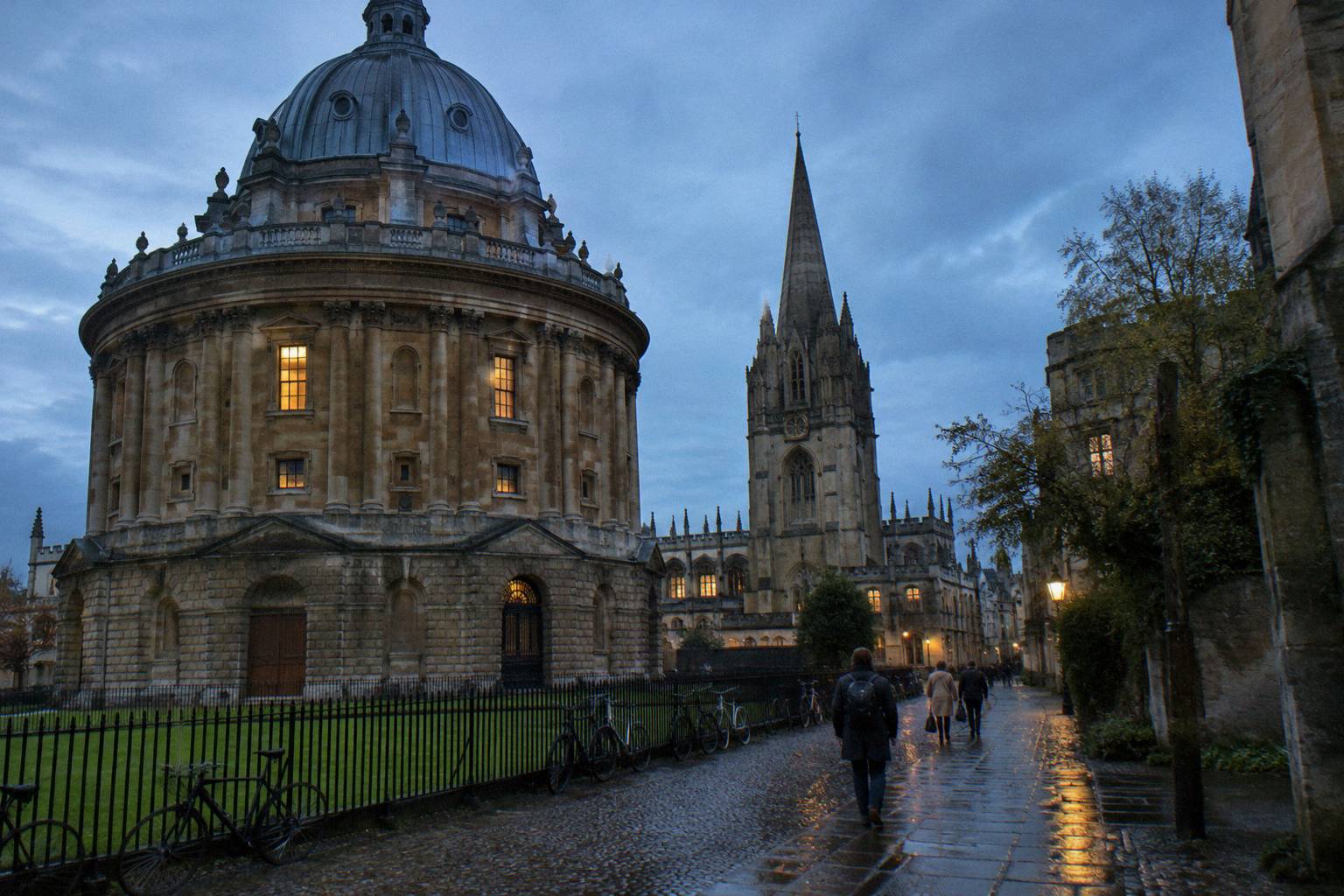
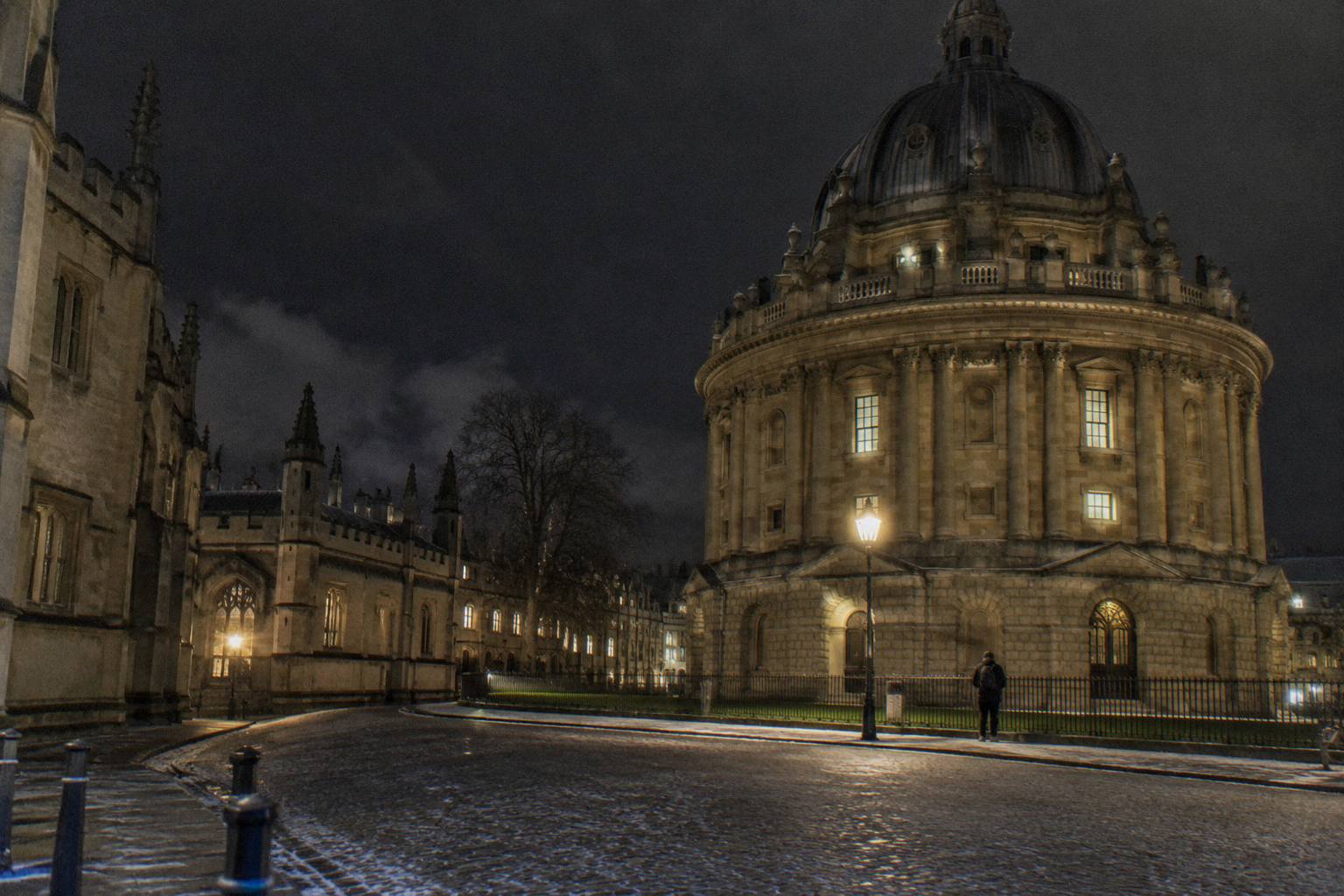
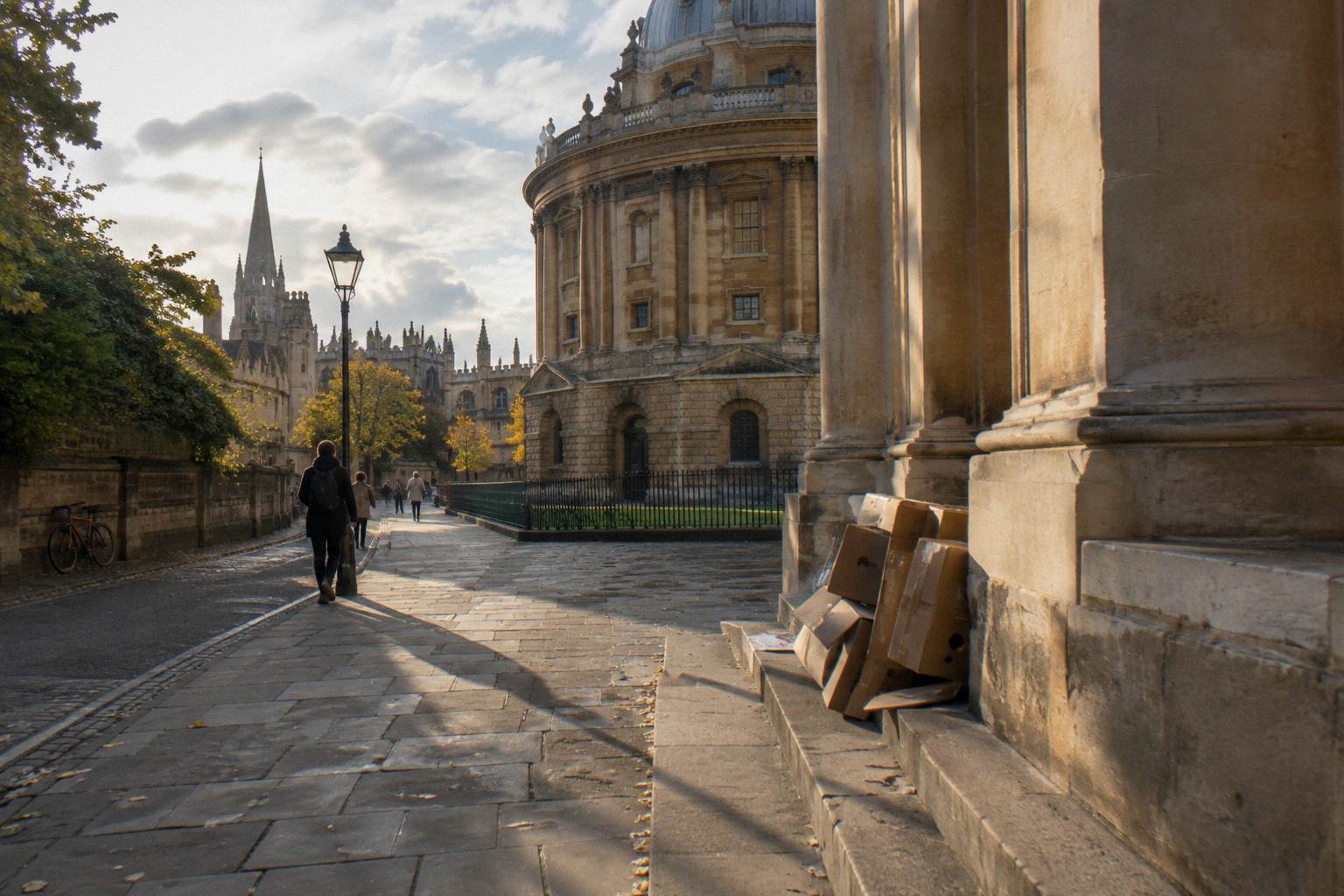
The short answer deserves a little unpacking, because the question people are really asking is usually narrower: will I be standing somewhere strange at eleven at night? In Oxford's centre the answer is that you are standing in the same places you stood at midday. Radcliffe Square is an open square. The Bodleian and the Sheldonian bound it, the Radcliffe Camera sits in the middle of it, and the square itself is free to look at from any angle, a fact that holds whether the sky is blue or black. The Camera's interior is a different matter, tour-only and not a free drop-in, but the view from the square costs nothing and the square closes nothing.
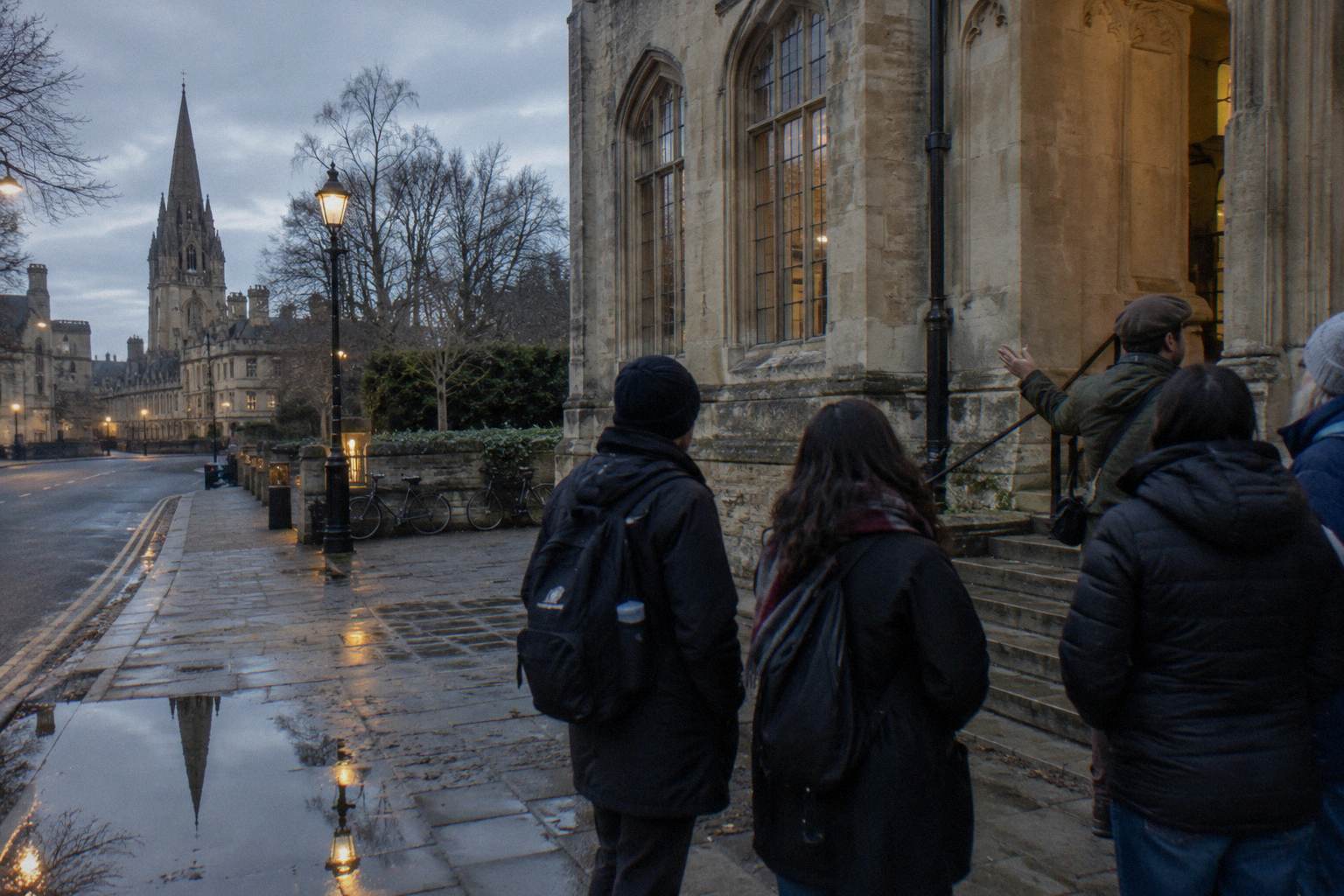
Broad Street works the same way. It is one of the most used meeting streets in the city, and the roster explains why: two of the four free GuruWalk walks meet at the Weston Library steps on Broad Street, and a third meets at the Oxfam shop at 17 Broad Street. A street that three independent guides use as a rendezvous is a street with a public character, and that character does not depend on office hours. Carfax, the junction at the heart of the centre, is another open public space record, and High Street runs from it past college fronts that are just as viewable after dark as before.
The practical division of the day, then, looks like this. Morning and afternoon belong to the reserved walks and the museums, all of which are daytime activities. Late afternoon belongs to the meadows and riverside if daylight allows. Evening belongs to the streets, the squares and the exteriors, which is precisely the layer of the city that is free at every hour. Anyone who wants the daytime structure laid out hour by hour will find the free routes and itinerary guide does that job, and this page deliberately stays on the evening half of the question.
One more structural point helps the evening walker: the meeting points double as orientation anchors. If you can find the Weston Library steps, the Oxfam shop at 17 Broad Street and the Martyrs' Memorial at the junction of St Giles', Magdalen Street and Beaumont Street, you can find your way across the entire historic core, because those three points bracket it from the middle, the east end of Broad Street and the north. That is not a safety claim, it is geometry, and it is the kind of fact that makes an unfamiliar city at night feel organised.
Which Areas Feel Quietest After Dark?
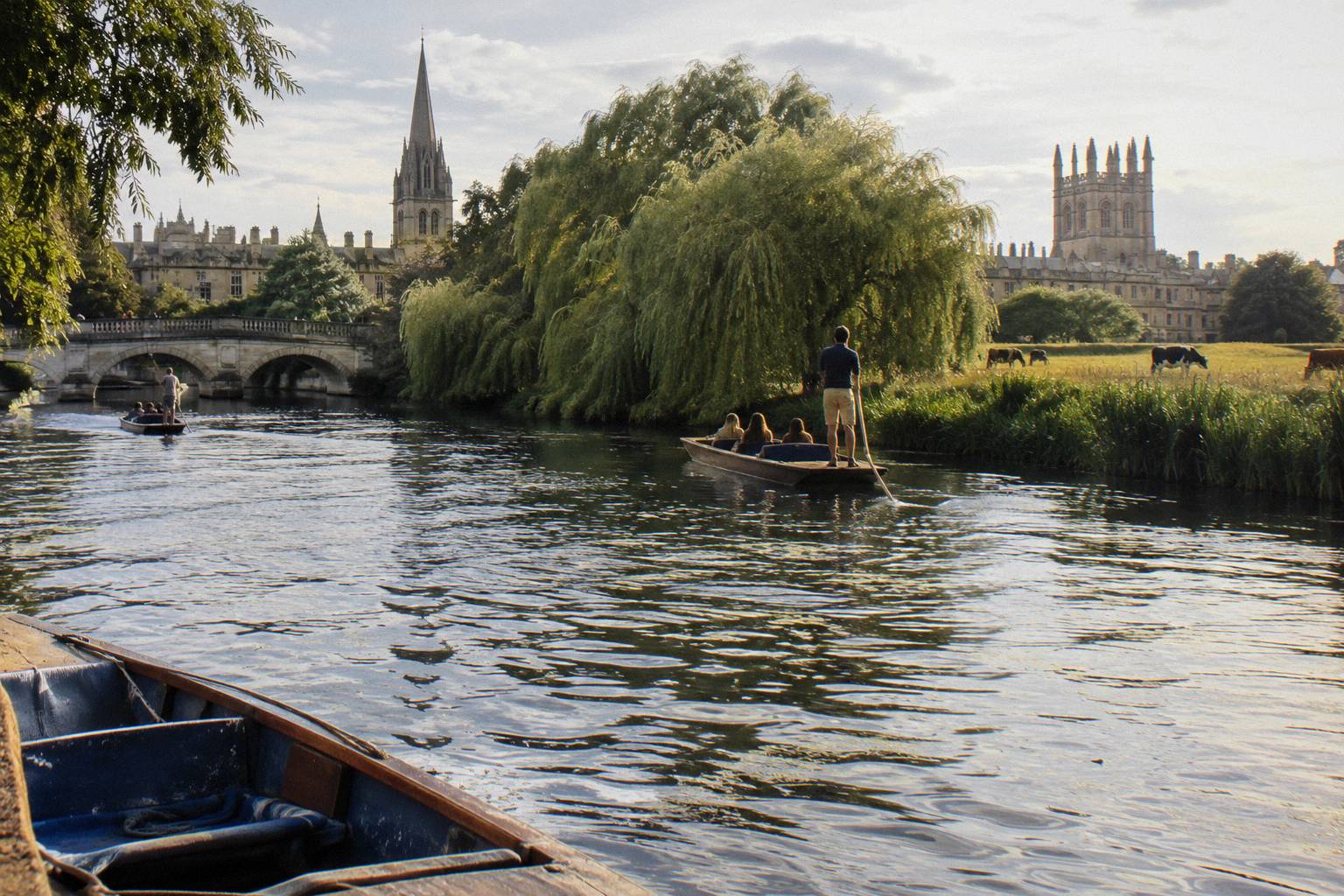
After dark, the quiet settles on Radcliffe Square, the open public space at the centre flanked by the Bodleian and the Sheldonian, with the Radcliffe Camera at its middle. Broad Street and High Street also grow quieter than their daytime selves once the shops shut. The meadows, Port Meadow and Christ Church Meadow, suit daylight rather than a dark return, and the ticketed sights, including the colleges, sit outside the evening map entirely.
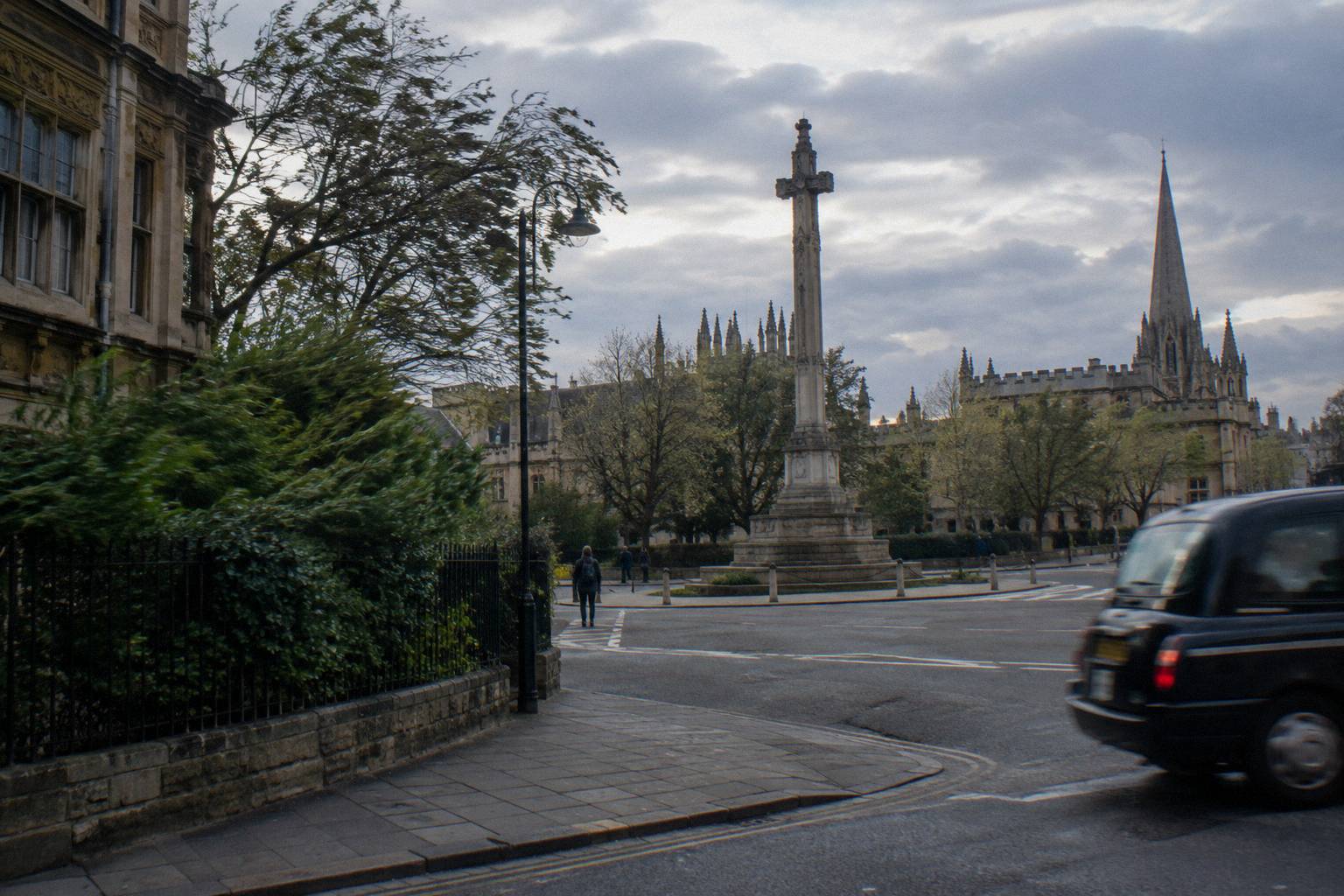
Radcliffe Square is the anchor of the quiet evening centre, and it earns that place honestly. It is an open square, free to enter and cross, holding the Radcliffe Camera at its centre with the Bodleian and the Sheldonian around it. The Camera itself is free to look at from the square but its interior is tour-only, so the square's whole offer is exterior and the whole offer survives nightfall intact. The Bridge of Sighs stands in this same quarter, another exterior sight that asks nothing and closes nothing. A loop from Radcliffe Square past the Sheldonian to the Bridge of Sighs and back is entirely on open public ground.
The street layer quiets on its own schedule. High Street, which runs from Carfax toward the riverside colleges, is an open public street lined with college fronts whose stonework is the attraction, and the fronts do not close. Broad Street in the evening is the same wide street the guides use by day. Jericho, the district to the west of the centre, appears in the city's free-sights records as a neighbourhood of open streets rather than a gated attraction, and it connects the centre toward Port Meadow for anyone walking that way in daylight. None of these streets charges anything to walk, which is why they carry the evening.
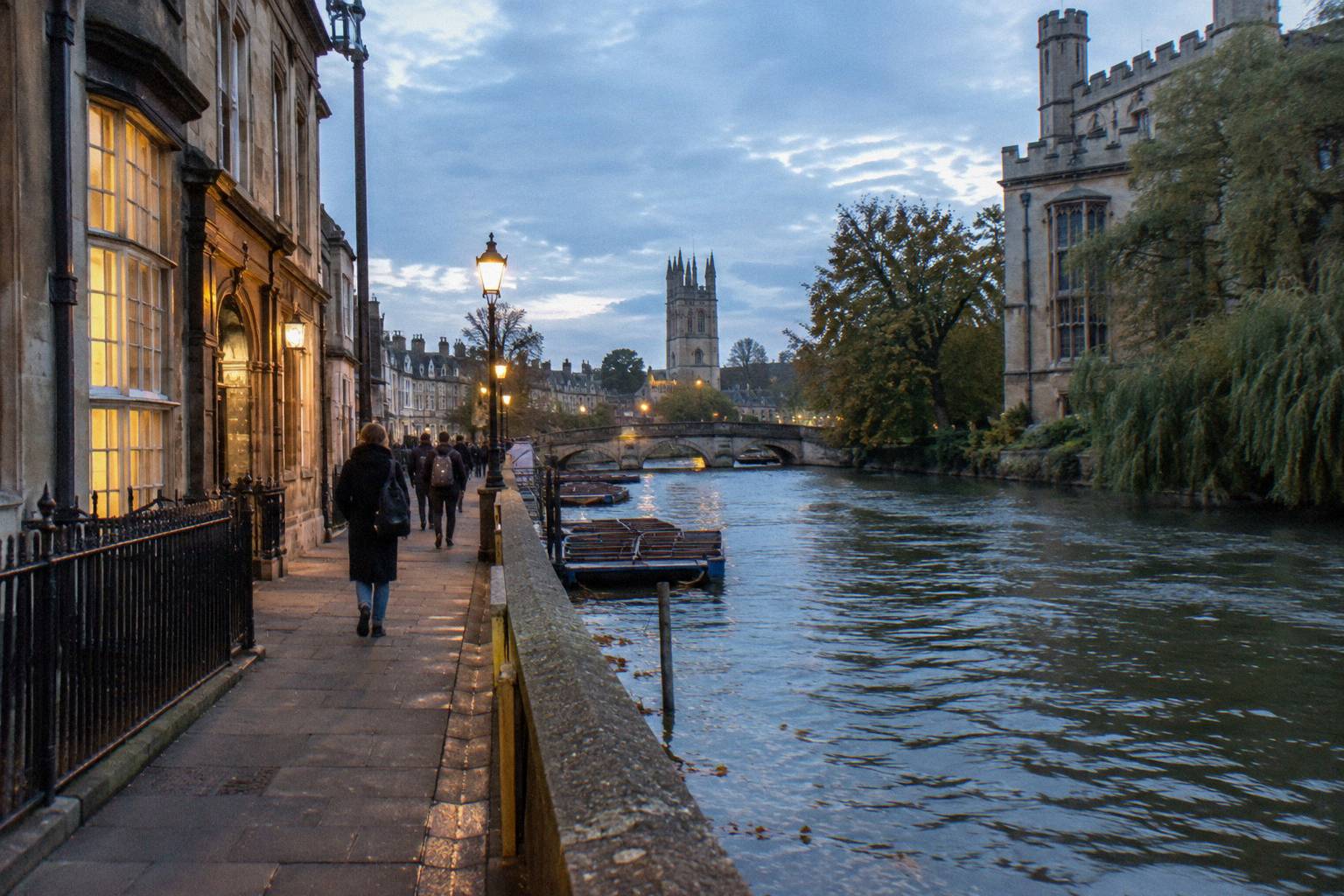
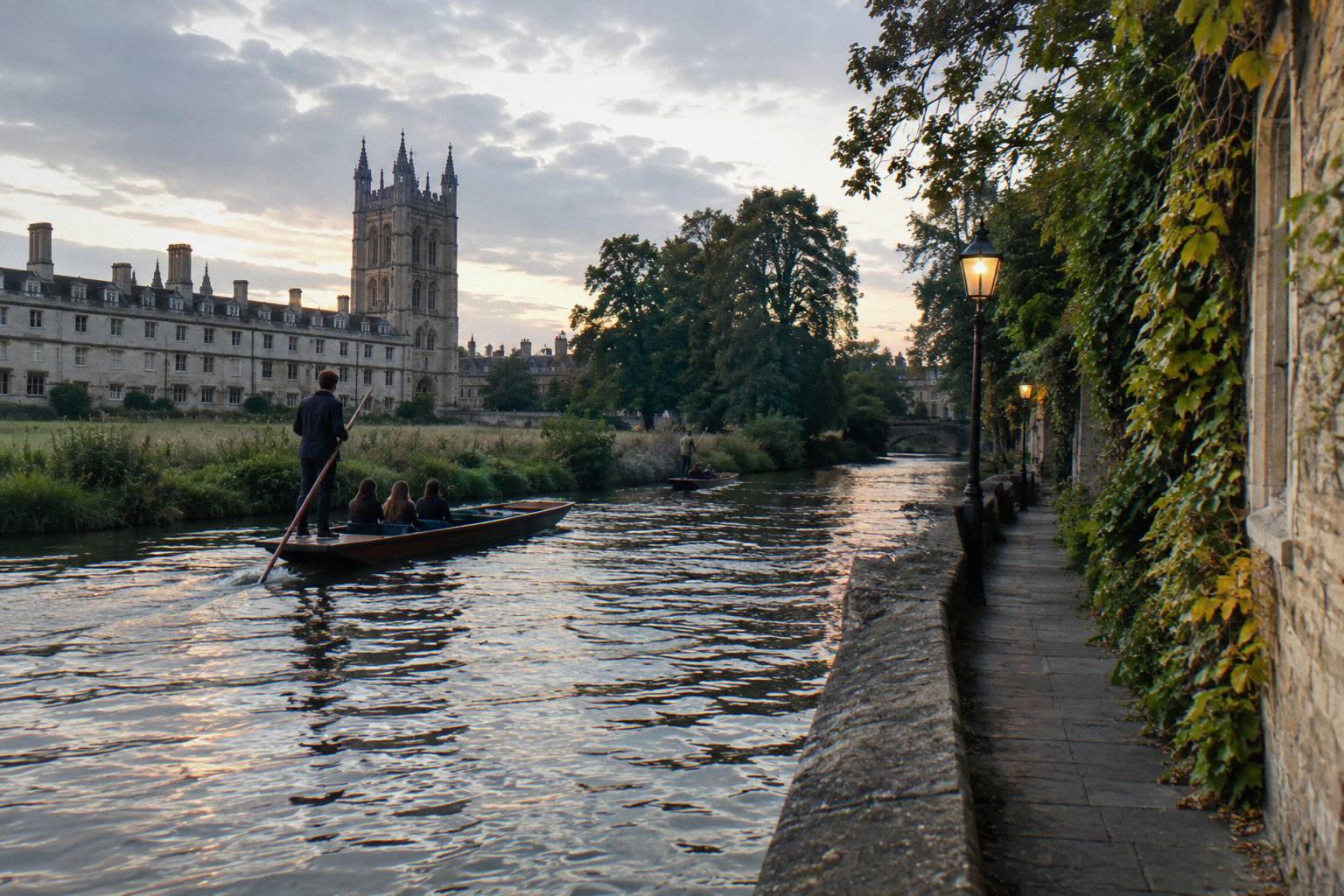
Then there is the water layer. The Thames and the Cherwell frame the city, and Christ Church Meadow sits between them as a free riverside walk. It is genuinely free, open ground, but it is a meadow, and a meadow at night is a different proposition from a paved square. This site publishes no claims about lighting, surfaces or conditions on any path, so the honest framing is daylight advice: take the meadows while the light holds and give the evening to the stone. Port Meadow, the free walk with wildlife and riverside pubs to the north, is the same category, open countryside on the city's edge.
Here is how the evening map sorts, sight by sight:
| Area or sight | Status | Evening role |
|---|---|---|
| Radcliffe Square | Open public space, free at any hour | The heart of the night walk |
| Broad Street | Open public street, meeting street for 3 walks | Orientation anchor |
| High Street and Carfax | Open public street and junction | Main axis after dark |
| Sheldonian and Bridge of Sighs | Exterior sights, free to view | Scenery on the square loop |
| Christ Church Meadow | Free riverside walk | Daylight walk, not an evening plan |
| Port Meadow | Free riverside and wildlife walk | Daylight walk |
| Christ Church college and cathedral | Paid timed ticket, services free to attend | Daytime visit only |
| University Church of St Mary the Virgin | Free to enter, tower climb ticketed at GBP 7 | Daytime visit, tower anyway |
| College interiors generally | Most charge, restrict hours or exclude casual visitors | Not part of the night map |
The last row is the one that saves people the most confusion. There is no version of Oxford where the colleges as a group are free and open, because they are not: Magdalen, Merton, Trinity, Balliol, University College, Oriel and Jesus charge or run tours only, All Souls, Lincoln, Corpus Christi, Keble, St John's, Wadham, Lady Margaret Hall and Brasenose admit walkers free at stated hours or porter's discretion, and Pembroke, Worcester, Hertford and Queen's do not admit casual visitors at all. The free-to-enter colleges are a daytime opportunity with stated hours, and evening visitors who plan around college courtyards are planning around shut doors. The evening plan that works is the one built on streets and squares, which is also, not coincidentally, the free plan.
What Do Evening Walkers Do?
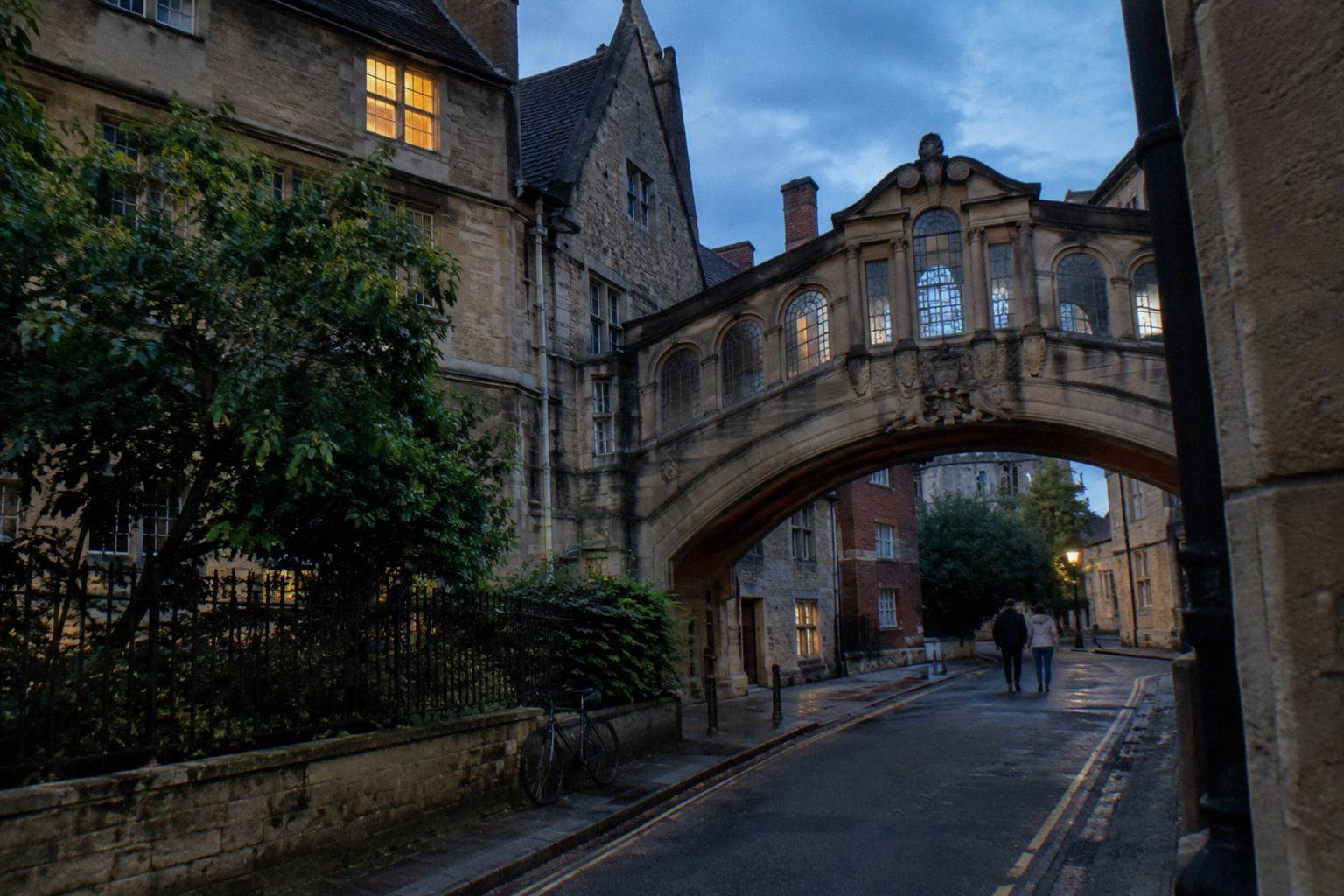
Evening walkers stick to the exteriors: Radcliffe Square, the Sheldonian, the Bridge of Sighs, the college fronts along High Street, and the wide run of Broad Street, all free and open at any hour. They save the GuruWalk walks for daylight, since each is a timed reservation lasting 1 hour 30 minutes or 2 hours, and leave the museums, ticketed colleges, and meadows to the daytime half of the visit.
The question of what people actually do after dark resolves into a short, honest list. First, the square loop: Radcliffe Square, the Sheldonian's exterior, the Bridge of Sighs, and the lanes connecting them, all within a few minutes' walk of each other. Second, the street axis: Carfax to High Street, or Carfax to Broad Street, both open public space with college and shop fronts as the scenery. Third, the riverside, but as noted that is a daylight walk. And fourth, the Covered Market and similar daytime browsing, which is an evening non-starter since it belongs to shopping hours rather than open public space. The pattern is clear: the evening city is the exterior city.
The daytime half is where the walks come in, and they slot in before dark rather than after it. The University And Colleges Walk, run on GuruWalk by Iryna, is a 2-hour English walk meeting at the Martyrs' Memorial on Magdalen Street, rated 4.47 out of 5 across 15 GuruWalk reviews. It belongs to the Colleges And University category, which is to say it is the daytime complement to the evening's exterior stroll: the walk handles the university story in daylight, and the night walk handles the same buildings from the outside for nothing. That division, guided depth by day and free exteriors by night, is the natural shape of an Oxford visit.
It is also worth being clear about what the walks are, since the word "tour" can suggest a night-time product that does not exist here. Every walk on this site's roster is free, pay what you want, reserved on GuruWalk: no ticket, no fixed fee, you choose what to give. The 4 free walking tours on GuruWalk all run in English and one also runs in Italian, and none carries any extra-cost flag. They are reservations with named meeting points and set durations, and the evening walker's relationship to them is simple: take one earlier in the day, then keep walking the centre on your own after the museums and colleges have closed their doors.
For anyone pairing the evening with a plan for the hours before it, the budget-first list of free options orders the whole day around things that cost nothing, and the evening streets sit at the top of that list by rights. The Ashmolean's free galleries, detailed in the Ashmolean free-entry guide, are the classic daylight pairing, and its own site confirms the free-entry policy: the Ashmolean's entry page. Museums by day, stone by night, and the whole visit stays inside a walkable core.
Which Free Walking Tours Cover This?
None of the free GuruWalk walks is a night walk; each is a reservation of 1 hour 30 minutes or 2 hours with a named meeting point and no extra-cost flag. The University And Colleges Walk from the Martyrs' Memorial is the closest fit for the university quarter, while the Town And Gown History Walk, the Bilingual Walk, and the Student's Tour all meet on Broad Street.
The roster is small and precise, and it answers the coverage question exactly. In the Colleges And University category sit two walks. The University And Colleges Walk, guided by Iryna, runs 2 hours in English from the Martyrs' Memorial, rated 4.47 out of 5 across 15 GuruWalk reviews. The Student's Tour, 2 Hours, guided by Kailin, also runs 2 hours in English and meets at the Oxfam shop at 17 Broad Street, rated 4.2 out of 5 across 5 GuruWalk reviews. In the History And Town category sit the Town And Gown History Walk, guided by David, 2 hours in English from the Weston Library steps, rated 4.97 out of 5 across 148 GuruWalk reviews, and the Bilingual Walk, 1 Hour 30, guided by Michael, 1 hour 30 minutes in English and Italian from the same Weston Library steps, rated 4.47 out of 5 across 17 GuruWalk reviews.
For the evening question, the useful reading of that table is geographic. The Martyrs' Memorial stands at the junction of St Giles', Magdalen Street and Beaumont Street, which brackets the north of the centre. The Weston Library steps and the Oxfam shop both sit on Broad Street, which runs through the middle. Between them, the three meeting points trace the same axis an evening walker covers on foot, which means a daytime walk doubles as an orientation session for the night: by the time you have walked two hours from any of these starts, you know the core well enough to cross it in the dark without a map.
A note on how to read the walks' coverage: no walk's route beyond its meeting point, duration and language is described on its GuruWalk page in more detail than its title, and this site does not extend titles into route claims. What can be said is what the roster states: platform, guide, meeting point, duration, language and rating. That is enough to choose with, and choosing is what the evening walker needs to do in daylight, not at dusk. Each walk is free to join, you choose what to give, and reservations happen on GuruWalk.
Here is the full comparison in one view:
| Walk | Category | Guide | Meets at | Duration | Language | Rating on GuruWalk |
|---|---|---|---|---|---|---|
| Town And Gown History Walk | History And Town | David | Weston Library steps, Broad Street | 2 hours | English | 4.97 out of 5, 148 reviews |
| Bilingual Walk, 1 Hour 30 | History And Town | Michael | Weston Library steps, Broad Street | 1 hour 30 minutes | English and Italian | 4.47 out of 5, 17 reviews |
| University And Colleges Walk | Colleges And University | Iryna | Martyrs' Memorial, Magdalen Street | 2 hours | English | 4.47 out of 5, 15 reviews |
| Student's Tour, 2 Hours | Colleges And University | Kailin | Oxfam shop, 17 Broad Street | 2 hours | English | 4.2 out of 5, 5 reviews |
Mistakes That Trip People Up At Oxford At Night
The main mistakes are structural rather than situational: planning an evening around college interiors that charge, restrict hours, or exclude casual visitors; treating the meadows as night-time strolls when they are open countryside; expecting a free walk after dark without checking the start times on each GuruWalk listing; and assuming ticketed sights have a free evening version. Each error merges the free exterior with the gated interior; keep them separate and the evening plans itself.
The first mistake is the college one, and it catches people because Oxford's reputation is built on college quadrangles. Most colleges are not free and open: Magdalen, Merton, Trinity, Balliol, University College, Oriel and Jesus charge or admit only on tours, the free walk-in colleges, All Souls, Lincoln, Corpus Christi, Keble, St John's, Wadham, Lady Margaret Hall and Brasenose, admit at stated hours or porter's discretion, and Pembroke, Worcester, Hertford and Queen's do not admit casual visitors. A visitor who saves the colleges for the evening saves them for a locked door. The evening alternative costs nothing: the fronts of those same colleges, viewed from High Street and the surrounding lanes, which is open public space.
The second mistake merges Christ Church Meadow with Christ Church. The meadow is a free riverside walk; the college and cathedral need a paid timed ticket, and services are free to attend. Two facts, one name. The same split runs through the centre: the University Church is free to enter but its tower climb is ticketed, and the Radcliffe Camera is free to look at from Radcliffe Square but its interior is tour-only. Once you hold the pattern, free exterior beside gated or paid interior, almost every confusion in Oxford resolves, including the night-time ones.
The third mistake is expecting a night walk on the free model. The walks on this site are GuruWalk reservations with durations between 1 hour 30 minutes and 2 hours, meeting at named points on Broad Street and at the Martyrs' Memorial, and nothing in their pages describes evening departures. The evening is self-guided by nature, and the self-guided option is genuinely free: the streets and squares ask nothing. Anyone weighing a guided day against a solo evening can compare the two models in the self-guided versus free guided comparison.
The fourth mistake is treating distance casually. Nothing in the verified material describes walking times beyond the walks' own durations, and the honest number is that the guided core takes up to 2 hours at a guide's pace. Plan the evening loop from Radcliffe Square as a short walk, not a hike, and keep the meadows for daylight. The fifth mistake is small but common: building the evening around the Covered Market or other shopfront browsing, which keeps shop hours rather than street hours. The street, not the shop, is the unit of the Oxford evening.
Common Questions
Is It Safe To Walk Around Oxford At Night?
The centre of Oxford is a compact network of open public streets and squares, including Radcliffe Square, Broad Street and High Street, that are free to walk at any hour. This site publishes nothing on lighting, crowds or crime conditions, but structurally the evening city is the same walkable stone core you visit by day, with the ticketed sights closed to the evening and the exteriors free.
Are The Free Walking Tours Available In The Evening?
Start times are set on each walk's GuruWalk listing and are not listed here; the 4 free walks each have a duration of 1 hour 30 minutes or 2 hours and a named meeting point: the Weston Library steps, the Oxfam shop at 17 Broad Street, or the Martyrs' Memorial. Nothing on their pages describes evening departures, so evening exploring is self-guided and free.
Which Parts Of Oxford Are Free To Walk At Any Hour?
The open public streets and squares: Radcliffe Square with the Radcliffe Camera, the Bodleian and the Sheldonian around it, the Bridge of Sighs, Broad Street, High Street and Carfax. All are free to walk through with no gate or ticket. The meadows, Port Meadow and Christ Church Meadow, are also free but are open countryside best suited to daylight.
Can You Walk Into Oxford Colleges At Night?
No. Most colleges charge for entry, run tours only, or do not admit casual visitors at all, and the free walk-in colleges, such as All Souls, Lincoln, Keble and St John's, admit at stated hours or porter's discretion. College interiors are a daytime visit; the evening view of the colleges is their exteriors from open public streets, which costs nothing.
How Long Does It Take To Walk Across Oxford's Centre?
The guided walks cross the historic core in between 1 hour 30 minutes and 2 hours, which is the best verified measure of the centre's scale on foot. An evening loop around Radcliffe Square, Broad Street and High Street is shorter than that, since it stays inside the core rather than crossing it.
What Is There To Do In Oxford After Dark For Free?
Walk the exteriors: Radcliffe Square, the Sheldonian, the Bridge of Sighs and the college fronts on High Street, all open public space that is free at any hour. Museums such as the Ashmolean are free to enter but belong to daytime hours, and ticketed sights such as Christ Church and the University Church tower are daytime visits. The evening layer of Oxford is the stone and the streets.